

If you spend most of your day typing, clicking a mouse, or performing repeated hand and wrist movements, you may have already felt the warning signs — a dull ache in your forearm, numbness in your fingers, or that uncomfortable tingling that shows up late at night. These are not just minor inconveniences you have to live with. They are often early signals of repetitive stress injuries, and carpal tunnel syndrome is one of the most common conditions in this family. Here in Lutz, FL, Dr. Jacob Henricksen at Crystal Grove Chiropractic sees patients dealing with these issues on a regular basis, and the good news is that there is a great deal you can do — both to prevent these problems and to manage them conservatively once they develop.
What Are Repetitive Stress Injuries and Carpal Tunnel Syndrome?
Repetitive stress injuries (RSIs) are a category of musculoskeletal conditions caused by repetitive movements, sustained postures, or overuse of specific muscle groups and joints over time. Carpal tunnel syndrome is one of the most recognized RSIs. It occurs when the median nerve — which runs through a narrow passageway in the wrist called the carpal tunnel — becomes compressed or irritated, leading to pain, numbness, and weakness in the hand and fingers.
What Causes Repetitive Stress Injuries?
The human body is remarkably well-designed for varied, balanced movement. Problems arise when we ask the same joints, muscles, tendons, and nerves to perform the same motion hundreds or thousands of times each day without adequate rest or recovery. Over time, this sustained mechanical demand leads to cumulative strain that the body cannot fully repair between cycles of use.
Carpal tunnel syndrome specifically develops when structures within the wrist — including tendons and surrounding tissue — become inflamed or irritated enough to reduce the available space for the median nerve. This compression is often gradual. It can be worsened by prolonged wrist flexion or extension, sustained gripping, vibration from tools or equipment, and poor ergonomic positioning at a workstation.
It is also worth noting that the wrist does not function in isolation. The mechanics of the neck, shoulder, and elbow all play a role in how load and tension are distributed through the arm. When the upper spine or shoulder region is not moving well, the wrist and hand often end up compensating — which can accelerate the development of RSIs over time.
Recognizing the Signs and Symptoms
One of the challenges with repetitive stress injuries is that they tend to develop slowly. Many patients at Crystal Grove Chiropractic in Lutz, FL initially dismiss their early symptoms as “just tired hands” or attribute the discomfort to aging. But catching these changes early makes a significant difference in outcomes.
With carpal tunnel syndrome specifically, the most classic symptoms include numbness and tingling in the thumb, index, middle, and part of the ring finger — this is the distribution of the median nerve. Some people notice that these sensations are worst at night or first thing in the morning. Others describe a burning or aching feeling along the inner wrist and forearm.
As the condition progresses, individuals may notice weakness in the grip, difficulty with fine motor tasks like buttoning clothing or holding a cup, or a tendency to drop objects unexpectedly. More generalized RSIs of the forearm and wrist may present as aching or fatigue with use, stiffness after rest, or a feeling of reduced coordination. Any of these patterns deserves professional attention rather than being pushed through.
Who Is Most at Risk?
Repetitive stress injuries do not discriminate by age. While they are very common among office workers and people who type for long hours, they are equally prevalent in tradespeople, musicians, mechanics, assembly line workers, hairstylists, and healthcare professionals. Any occupation or hobby requiring sustained, repetitive hand and wrist movements can contribute to these conditions.
There are also anatomical and systemic factors that may increase susceptibility. People with smaller carpal tunnels are naturally more prone to nerve compression. Conditions such as diabetes, thyroid dysfunction, and inflammatory arthritis can increase the likelihood of nerve-related issues. Pregnancy is also a known contributor, as fluid retention can increase pressure within the wrist.
Ergonomic factors play a major role as well. A workstation that forces the wrists into an extended or flexed position for hours, a chair height that is too low or too high, a monitor positioned to cause forward head posture — all of these create a chain of postural stress that eventually reaches the hands and wrists. Dr. Jacob Henricksen often evaluates the full postural picture with patients to understand how workstation habits may be contributing to their symptoms.
How Chiropractic Care Fits Into Recovery and Prevention
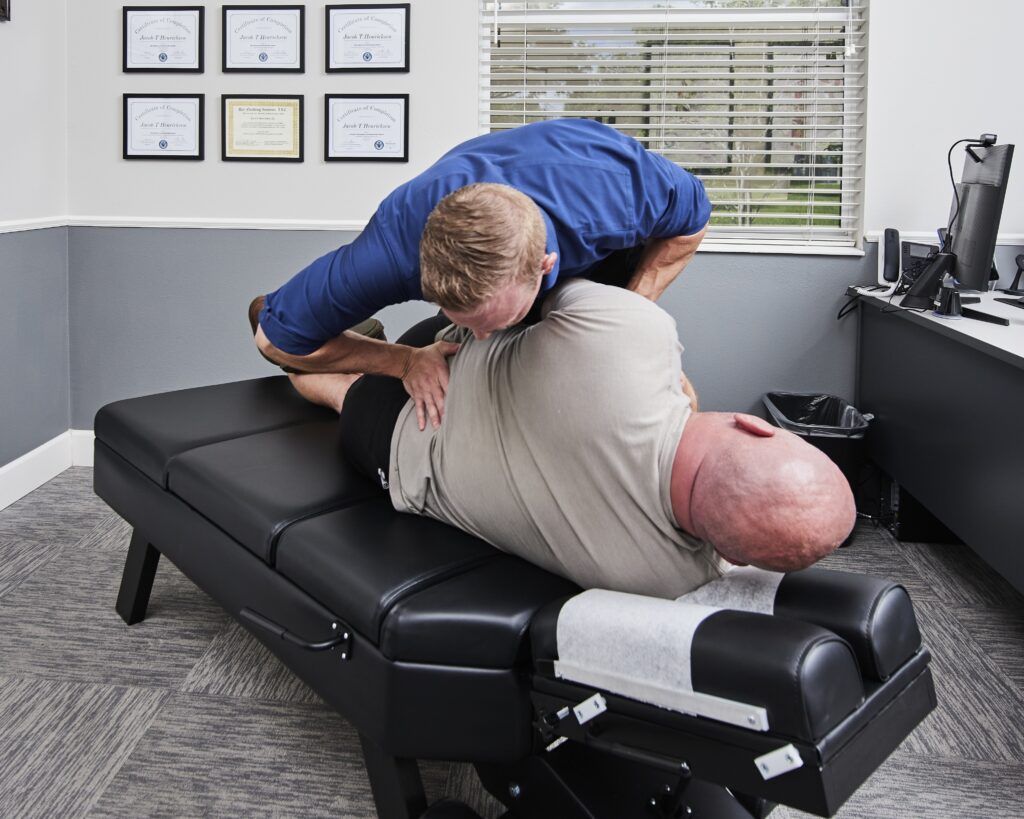
Chiropractic care offers a conservative, non-invasive approach to addressing both the symptoms and the underlying mechanical contributors to repetitive stress injuries and carpal tunnel syndrome. Rather than relying on medication or surgery as first steps, chiropractic care focuses on restoring proper joint function, reducing nerve irritation, and helping the body work more efficiently as a whole.
A key component of this approach involves evaluating the cervical spine — the neck — as well as the upper thoracic region and the mechanics of the shoulder, elbow, and wrist. Nerve compression does not always originate at the wrist alone. In some cases, the median nerve or related nerves can be irritated at multiple points along their path, including the neck and upper chest area. Chiropractors refer to this concept as a “double crush” phenomenon, where nerve irritation at one site lowers the threshold for irritation at another. Addressing spinal mechanics can be a meaningful part of the overall recovery process.
At Crystal Grove Chiropractic, Dr. Jacob Henricksen performs a thorough evaluation that considers the full kinetic chain — from the cervical spine through the shoulder, elbow, wrist, and hand. Chiropractic adjustments targeted at restricted joints in the neck, upper back, and wrist can help restore normal motion, reduce nerve tension, and support the body’s natural healing process. This kind of individualized, whole-body assessment is what separates chiropractic care from simply treating the wrist in isolation.
Evidence from the National Center for Complementary and Integrative Health (NCCIH) and various conservative care guidelines suggests that non-surgical approaches, including manual therapy and specific exercises, are appropriate first-line options for many patients experiencing carpal tunnel symptoms. Dr. Jacob Henricksen works with patients to build a care plan that is realistic, evidence-informed, and supportive of their daily life goals.

Practical Prevention Tips You Can Start Today
Prevention is always easier than recovery, and there are several practical adjustments you can make starting right now to reduce your risk of developing a repetitive stress injury or worsening an existing one.
Your workstation setup matters more than most people realize. Your keyboard and mouse should be positioned so that your wrists remain in a relatively neutral position — not bent upward, downward, or twisted to the side. Your elbows should be at roughly a 90-degree angle, your monitor at eye level, and your chair height adjusted so your feet rest flat on the floor. Making even small corrections to your workspace can dramatically reduce cumulative strain over the course of a workday.
Taking micro-breaks is one of the simplest and most underused strategies for preventing RSIs. Even 60 seconds of rest every 20 to 30 minutes can allow your muscles and tendons time to recover between bouts of repetitive movement. During these breaks, gently opening and closing the hands, rolling the wrists, and stretching the forearms can help maintain circulation and flexibility.
Strengthening the muscles of the forearm, wrist, and hand — as well as the muscles of the shoulder and upper back — can build resilience over time. A well-supported shoulder girdle takes unnecessary load off the forearm and wrist. Dr. Jacob Henricksen at Crystal Grove Chiropractic in Lutz, FL can guide you through specific movement and strengthening recommendations that are appropriate for your situation.
Posture awareness during the entire workday — not just at the desk — also counts. How you hold your phone, carry bags, sleep on your side, or grip the steering wheel all contribute to the cumulative load on your upper extremities. Small daily habits, consistently adjusted, lead to meaningful long-term change.
When to See a Chiropractor
You do not need to wait until your symptoms are severe to benefit from chiropractic care. In fact, the earlier you address early warning signs, the more straightforward the process tends to be. If you have noticed tingling, numbness, or aching in your hands or forearms that has persisted for more than a week or two, that is a good reason to schedule an evaluation.
You should also consider being seen if your symptoms are interfering with your sleep, limiting your ability to work, or affecting activities you enjoy. Weakness in the hands, particularly when gripping or pinching, is another signal that warrants professional attention rather than a “wait and see” approach.
There are some red flag signs that should prompt a visit to your medical doctor or an urgent care provider rather than a chiropractor as a first step. These include sudden severe weakness or paralysis in the hand or arm, significant loss of sensation, symptoms following a traumatic injury, or symptoms accompanied by significant neck pain and radiating electrical sensations. A good chiropractor will always help guide you to the appropriate level of care based on your specific situation.
|
Ergonomic Problem |
Why It’s Harmful |
Recommended Correction |
|---|---|---|
|
Wrists bent upward while typing |
Increases pressure on the median nerve in the carpal tunnel |
Keep wrists neutral; use a wrist rest only during breaks |
|
Monitor too low or too high |
Causes forward head posture, straining the cervical spine and increasing arm tension |
Position top of monitor at or just below eye level |
|
Mouse placed too far from body |
Forces shoulder elevation and forearm extension, adding strain to the wrist |
Keep mouse close to the body with elbow relaxed at your side |
|
Tight grip on mouse or pen |
Increases forearm muscle fatigue and tendon load |
Practice a relaxed grip; use ergonomic tools when available |
|
No scheduled breaks |
Prevents muscular recovery, accelerating cumulative strain |
Take 60-second movement breaks every 20–30 minutes |
Myths vs. Facts About Carpal Tunnel and RSIs
Myth: Carpal tunnel syndrome only affects people who type all day.
Fact: While keyboard-heavy work is a common contributing factor, carpal tunnel syndrome affects a wide range of people — including musicians, mechanics, plumbers, hair stylists, and those who use vibrating tools. Any sustained or repetitive wrist and hand activity can play a role.
Myth: Surgery is the only way to fix carpal tunnel syndrome.
Fact: Conservative care — including chiropractic evaluation, joint mobilization, activity modification, and ergonomic changes — is widely recognized as an appropriate first approach for many patients with mild to moderate carpal tunnel symptoms. Surgery may be appropriate in more advanced or severe cases, but it is rarely the required first step.
Myth: If you have carpal tunnel, rest alone will make it go away.
Fact: Rest can certainly reduce acute symptoms, but without addressing the underlying mechanical and ergonomic causes, symptoms often return once activity resumes. A comprehensive plan that includes evaluation of posture, spinal mechanics, and workstation setup tends to produce more lasting results.
Myth: Repetitive stress injuries are a normal part of getting older and there is nothing you can do.
Fact: While aging can be a contributing factor, RSIs are largely driven by biomechanical habits and cumulative strain — both of which are modifiable. Many people in their 50s, 60s, and beyond successfully prevent and manage these conditions with proactive care and smart ergonomics.
Myth: Wrist braces cure carpal tunnel syndrome.
Fact: Wrist braces, particularly those worn at night, can help reduce symptoms by keeping the wrist in a neutral position during sleep. However, they address symptoms rather than underlying causes. They are most effective as part of a broader management plan that includes proper evaluation and mechanical correction.
Final Thoughts from Crystal Grove Chiropractic
Living with tingling hands, aching wrists, or the creeping discomfort of a repetitive stress injury does not have to be your normal. These conditions are among the most preventable and most manageable musculoskeletal problems — when they are taken seriously early and addressed with the right approach.
Here at Crystal Grove Chiropractic in Lutz, FL, Dr. Jacob Henricksen is passionate about helping the local community understand not just how to treat these problems, but how to prevent them from developing in the first place. Whether you are a remote worker logging long hours at a desk, a tradesperson whose hands are your livelihood, or someone who simply wants to stay ahead of discomfort before it becomes a bigger issue, chiropractic care can be a meaningful part of your wellness strategy.
The Lutz and greater Tampa Bay community deserves access to honest, evidence-informed care that respects your time, your goals, and your body. If anything in this article has resonated with what you are experiencing, we encourage you to reach out to Crystal Grove Chiropractic and schedule a conversation with Dr. Jacob Henricksen. You deserve to feel well — and getting there is often more achievable than you might think.
Frequently Asked Questions
Can a chiropractor actually help with carpal tunnel syndrome?
Yes, chiropractic care can be a helpful part of managing carpal tunnel syndrome, particularly in mild to moderate cases. Chiropractors evaluate the full mechanical picture — including the neck, shoulder, elbow, and wrist — to identify where nerve irritation and joint restriction may be contributing to symptoms. Evidence supports conservative care as an appropriate first-line approach before considering more invasive options.
How long does it take for repetitive stress injuries to develop?
RSIs typically develop over weeks, months, or even years of sustained repetitive activity. They rarely appear overnight. The gradual onset is actually one reason they are often caught late — early symptoms are easy to dismiss. Consistent ergonomic habits and regular movement can significantly slow or prevent this progression.
Is it safe to keep working while I have carpal tunnel symptoms?
In most cases, continuing light to moderate work is acceptable, especially when ergonomic adjustments are made. However, pushing through significant pain or numbness without evaluation can allow the condition to worsen. Getting a professional assessment helps you understand what activity level is appropriate for your situation.
Do I need imaging like an MRI or X-ray to diagnose carpal tunnel syndrome?
Carpal tunnel syndrome is often diagnosed through clinical examination, including specific orthopedic and neurological tests, alongside a review of your symptoms and history. Nerve conduction studies are sometimes used for confirmation. Imaging is not always necessary, though your provider may recommend it to rule out other causes of your symptoms.
Can poor posture really contribute to wrist and hand problems?
Absolutely. The neck and upper spine directly influence how nerves travel down the arm to the wrist and hand. Forward head posture and rounded shoulders create tension along these nerve pathways that can amplify symptoms at the wrist. Addressing posture and spinal mechanics is often a valuable — and sometimes overlooked — part of managing hand and wrist conditions.
How is chiropractic care for carpal tunnel different from physical therapy?
Both chiropractic care and physical therapy offer conservative, non-surgical approaches and there can be meaningful overlap between the two. Chiropractic care places particular emphasis on spinal and joint mechanics, nerve function, and the relationship between the spine and the extremities. Dr. Jacob Henricksen at Crystal Grove Chiropractic takes a whole-body, structural approach that considers how cervical and upper thoracic alignment contribute to wrist and hand symptoms.
TL;DR Summary
-
Repetitive stress injuries, including carpal tunnel syndrome, develop gradually from sustained repetitive movements and poor ergonomic habits — they are largely preventable with early awareness and action.
-
Symptoms like tingling, numbness, and wrist aching should not be ignored — catching them early leads to better outcomes with conservative care.
-
Chiropractic care addresses the full mechanical picture, including cervical spine health, shoulder posture, and wrist mechanics — not just the site of pain.
-
Practical strategies like workstation corrections, micro-breaks, neutral wrist positioning, and posture awareness can significantly reduce your cumulative strain over time.
-
Dr. Jacob Henricksen at Crystal Grove Chiropractic in Lutz, FL offers individualized, evidence-informed care for patients dealing with RSIs and carpal tunnel syndrome.