

If you’ve ever woken up with a sharp, shooting pain, a strange numbness down your arm, or that unmistakable tingling sensation in your fingers, you already know how disruptive a pinched nerve can be — and how the wrong sleeping position can trigger it overnight. Sleep is supposed to be your body’s time to heal and recover, but for people prone to pinched nerves, the way you position yourself in bed can either help your spine decompress or quietly make things worse. Here at Crystal Grove Chiropractic in Lutz, FL, Dr. Jacob Henricksen sees this issue regularly, and the good news is that small changes to how you sleep can make a meaningful difference in how you feel each morning.
What is a pinched nerve? A pinched nerve occurs when surrounding structures — such as bones, joints, or spinal discs — place excess pressure on a nerve. This pressure disrupts the nerve’s normal function and can cause pain, numbness, tingling, or weakness that radiates into nearby areas like the arms, hands, legs, or feet. The cervical spine (neck) and lumbar spine (lower back) are the most common locations where pinched nerves develop.
Why Sleep Position Matters for Nerve Health
Most adults spend somewhere between six and nine hours lying down each night. That’s a significant portion of your day spent in one position. When your spine is properly aligned during sleep, the joints and discs in your neck and back can decompress, nerves have adequate space to function without irritation, and surrounding muscles can relax fully. But when your spine is twisted, over-extended, or compressed in awkward ways for hours at a time, the cumulative effect can place serious pressure on vulnerable nerves.
For people who are already prone to pinched nerves — whether due to spinal stenosis, disc issues, arthritis, or poor posture built up over years — sleep position isn’t just a comfort preference. It’s a health consideration. Dr. Jacob Henricksen often points out to patients at Crystal Grove Chiropractic that many flare-ups don’t start at the gym or at a desk. They start in bed, during hours when you’re not even conscious of what your spine is doing.
The position you sleep in affects the natural curvature of your spine, the angle of your joints, and how much space is available in the openings (called foramina) through which nerves exit the spine. Even a modest change in joint angle held over several hours can reduce that space enough to irritate a nearby nerve root.

Sleeping Positions to Avoid if You’re Prone to Pinched Nerves
Sleeping on Your Stomach
Stomach sleeping is widely considered the most problematic position for spinal health, and it’s particularly risky for those prone to pinched nerves. When you lie face down, you’re forced to rotate your head sharply to one side just to breathe. This rotation places sustained stress on the joints and discs of the cervical spine and can compress the nerve roots in the neck. Over time — or even over a single night — this can trigger or worsen a pinched nerve in the neck, leading to pain, stiffness, or radiating symptoms down into the shoulder or arm.
Stomach sleeping also flattens the lumbar curve of your lower back, which shifts the mechanics of the spine in ways that can increase pressure on lumbar discs and the nerves that exit between them. The sciatic nerve, for example, which runs from the lower back down through the legs, is particularly sensitive to changes in lumbar positioning. If you’re prone to sciatica, stomach sleeping is one of the worst habits you can have at night.
Sleeping on Your Side with Your Neck Bent Upward or Downward
Side sleeping is often recommended as a generally healthy position, but how you support your neck in this position makes all the difference. If your pillow is too flat, your neck tilts downward toward the mattress, compressing the nerve roots on the lower side of the cervical spine. If your pillow is too high or too firm, your neck bends unnaturally upward, compressing the upper side instead. Either scenario can contribute to nerve irritation, especially for those who already have narrow foraminal spaces due to arthritis or disc changes.
In Lutz, FL, Dr. Jacob Henricksen frequently evaluates patients who side-sleep with a pillow that doesn’t properly support the neutral position of the neck. The fix is often surprisingly simple — the right pillow height — but the consequences of getting it wrong night after night can be significant.
Sleeping in a Curled-Up Fetal Position with Extreme Flexion
There’s a version of side sleeping that involves pulling your knees tightly up to your chest with your entire spine rounded forward. While a mild fetal position is generally acceptable, an extreme version — with your chin tucked down and your knees practically touching your elbows — places the entire spine into exaggerated flexion. This can stretch already-stressed nerve roots, particularly in the lumbar spine, and keep the joints in a compressed, rounded position for hours. People with disc bulges in the lower back often find that prolonged flexion aggravates their symptoms significantly.
Sleeping with Your Arm Extended Over Your Head
This is a common side-sleeping habit that many people don’t even realize they’re doing. When you raise one arm above your head during sleep, you stretch the brachial plexus — the network of nerves that travels from your neck down through your shoulder and arm. Holding this stretch-like position for extended periods can compress or irritate these nerves, leading to the numbness or “dead arm” feeling many people experience when they wake up. For those with pre-existing cervical nerve issues, this position can make morning symptoms noticeably worse.
Common Causes That Make You More Vulnerable
Understanding why some people are more prone to pinched nerves can help you take smarter preventive steps. Degenerative disc changes are one of the most common contributors. As spinal discs lose hydration and height with age, the spaces through which nerves exit the spine can narrow, leaving less room for those nerves to move freely. Any sleeping position that further reduces that space becomes a problem.
Spinal stenosis — a narrowing of the spinal canal itself — similarly reduces the available room for nerve tissue. Arthritis in the facet joints can create bone spurs that press against nerve roots. Poor postural habits developed during waking hours, such as forward head posture from prolonged screen use, can also pre-stress the cervical spine in ways that make it more vulnerable when you lie down.
At Crystal Grove Chiropractic in Lutz, FL, the team takes a full picture of each patient’s posture, movement patterns, and sleep habits to understand what’s feeding a recurring pinched nerve — because the solution rarely begins and ends in bed.
Better Sleeping Positions to Support Your Spine
The two positions most widely supported for spinal health are back sleeping and a properly supported side-sleeping position. Back sleeping, with a pillow supporting the natural curve of your neck and a second pillow placed under your knees, allows the spine to rest in a relatively neutral alignment and distributes body weight evenly. This position keeps pressure off the nerve roots and gives the intervertebral discs an opportunity to rehydrate slightly overnight.
Side sleeping is also a solid option when done correctly. The key is keeping your spine in a straight, level line from your head to your hips. A pillow between the knees helps prevent the top hip from rotating forward, which would twist the lumbar spine and add unnecessary stress to the lower back and the nerves within it. The pillow supporting your head should be thick enough to keep your neck perfectly level — not tilted up or down.
How Chiropractic Care Can Help
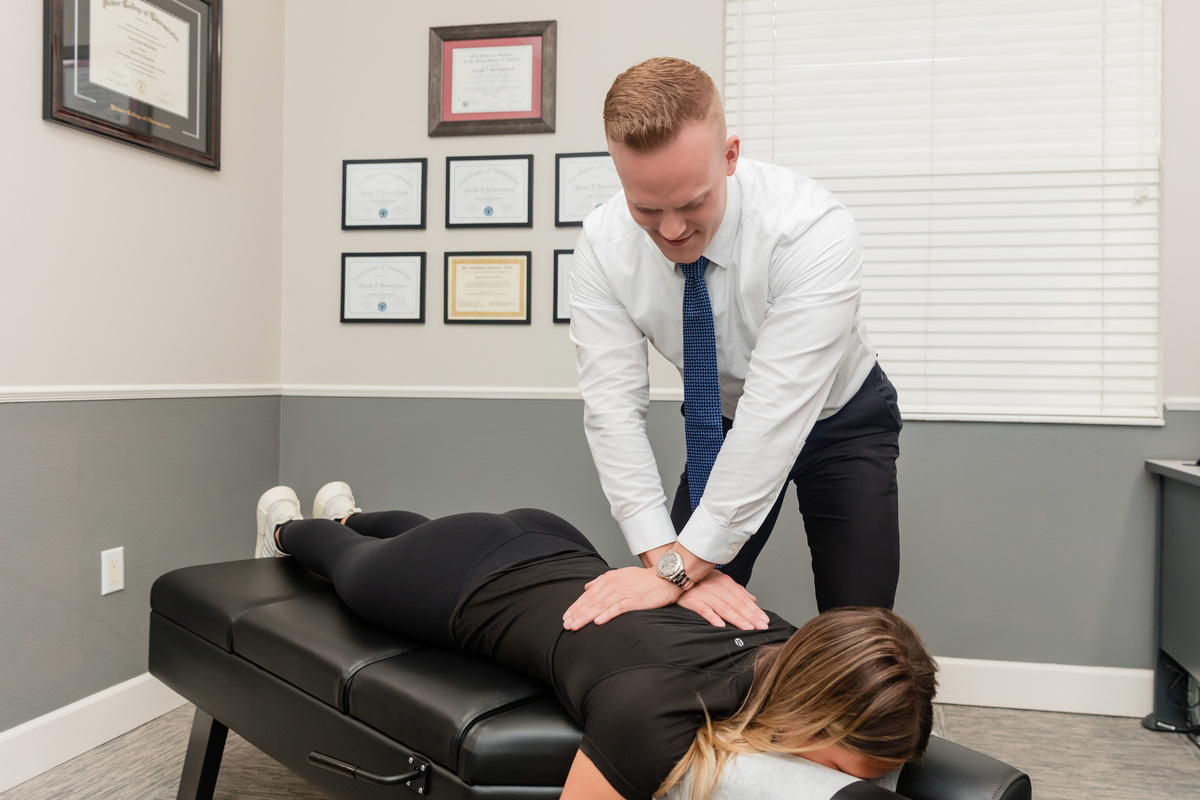
Chiropractic care offers a non-invasive, drug-free approach to addressing the underlying structural issues that contribute to pinched nerves. When a nerve is being compressed due to joint misalignment or reduced spinal space, chiropractic adjustments aim to restore proper joint mechanics, reduce inflammation around the nerve, and improve the overall movement and alignment of the spine. Evidence from organizations like the National Institutes of Health and the American Chiropractic Association suggests that spinal manipulation can be an effective component of conservative care for nerve-related pain conditions.
At Crystal Grove Chiropractic, Dr. Jacob Henricksen performs thorough evaluations to identify exactly where nerve compression is occurring and what structural factors are contributing to it. From there, care is individualized — it isn’t a one-size-fits-all approach. Depending on what’s found during the exam, care may include spinal adjustments, postural correction work, and specific guidance on how to modify your daily habits, including the way you sleep.
Many patients in Lutz, FL and the surrounding communities begin noticing improvements in their morning symptoms once they combine proper chiropractic care with better sleep hygiene practices. The two work together in a meaningful way — care helps restore normal nerve function, while improved sleep position prevents the problem from being repeatedly aggravated overnight.
Practical Tips for Sleeping With a Healthier Spine
One of the most impactful changes you can make is investing in a pillow that properly supports your neck in a neutral position. The right pillow varies by sleep position — back sleepers generally need a thinner, contoured pillow, while side sleepers need something firmer and taller. A mattress that provides even support without excessive sinkage in the hip area also plays a significant role in keeping the spine aligned during the night.
If you’re a stomach sleeper, transitioning to a different position can feel uncomfortable at first. One helpful strategy is placing a body pillow along your side, which makes it harder to roll onto your stomach during the night and gives you something to stabilize against while on your side. Changing long-established sleep habits takes time and patience, but the payoff in reduced nerve symptoms is often well worth it.
During the day, reducing the postural stress that accumulates in your spine before you even get into bed matters just as much. Being mindful of screen position, taking movement breaks during prolonged sitting, and doing gentle spinal mobility work can reduce the tension your spine carries into sleep — which means less pressure on those nerves even before your head hits the pillow.
When to See a Chiropractor
If you’re waking up regularly with pain, numbness, tingling, or weakness in your neck, back, arms, or legs, it’s worth having your spine evaluated. Occasional stiffness in the morning that resolves within an hour or two is fairly common, but symptoms that persist throughout the day, worsen over time, or interfere with your daily activities deserve professional attention.
Dr. Jacob Henricksen at Crystal Grove Chiropractic in Lutz, FL recommends scheduling an evaluation sooner rather than later if your symptoms include any of the following: radiating pain that travels from the neck into the arm or from the lower back into the leg, progressive weakness in a limb, or loss of coordination. These can indicate more significant nerve involvement that benefits from timely care.
Red flags that warrant immediate medical evaluation — rather than chiropractic care as a first step — include loss of bladder or bowel control, severe progressive neurological weakness, or symptoms following trauma. In those situations, urgent medical evaluation should come first.
|
Sleep Position |
Risk Level for Pinched Nerves |
Main Concern |
Recommended Modification |
|---|---|---|---|
|
Stomach sleeping |
High |
Forced neck rotation; flattened lumbar curve |
Avoid entirely; use body pillow to prevent rolling |
|
Side sleeping with poor pillow support |
Moderate to High |
Neck tilted up or down; cervical nerve compression |
Use properly sized pillow to keep neck level |
|
Extreme fetal position |
Moderate |
Excessive spinal flexion; lumbar nerve stretch |
Keep knees slightly bent, not pulled tightly to chest |
|
Arm raised over head during side sleep |
Moderate |
Brachial plexus stretch; numbness in arms/hands |
Keep arms at or below shoulder height |
|
Back sleeping with proper support |
Low |
Minimal — maintains spinal curves |
Add pillow under knees; use cervical support pillow |
|
Supported side sleeping (neutral spine) |
Low |
Minimal when properly supported |
Pillow between knees; level head position |
Myths vs. Facts About Pinched Nerves and Sleep
Myth: A firm mattress is always best for a pinched nerve.
Fact: Mattress firmness needs are highly individual and depend on your body weight, sleep position, and the specific area of the spine affected. An overly firm mattress can create pressure points and actually worsen spinal alignment in some sleepers. A medium-firm mattress that supports the spine’s natural curves without excessive sinkage is generally considered a balanced option, but personal comfort and neutral alignment are the true goals.
Myth: If you sleep on your side, you don’t need to worry about your neck position.
Fact: Side sleeping is generally a healthier position, but it does not automatically protect your cervical spine. Without a pillow that maintains a level neck position, side sleeping can compress nerve roots just as effectively as other problematic positions. Proper neck support is essential regardless of which healthy position you choose.
Myth: Pinched nerve pain that starts in the morning will go away on its own without any intervention.
Fact: While mild nerve irritation can sometimes resolve on its own with rest and improved habits, recurring or progressively worsening symptoms often indicate an underlying structural issue that won’t correct itself. Continuing to sleep in problematic positions without addressing the root cause typically leads to worsening and more frequent flare-ups over time.
Myth: Chiropractic adjustments are not safe for people with pinched nerves.
Fact: Chiropractic care, when properly evaluated and appropriately applied, is considered a safe and evidence-supported conservative option for many types of nerve-related spinal pain. A qualified chiropractor like Dr. Jacob Henricksen will thoroughly assess your specific condition before recommending any adjustments, tailoring care to your individual presentation.
Myth: You just need to “sleep it off” and avoid all movement when a pinched nerve flares up.
Fact: Complete rest and prolonged inactivity are not generally recommended for nerve-related pain. Gentle, appropriate movement often helps reduce inflammation around the nerve and keeps surrounding joints from stiffening. Your chiropractor can guide you on which movements are helpful and which to temporarily avoid during a flare-up.
Final Thoughts from Crystal Grove Chiropractic in Lutz, FL
Sleep should be a time of restoration — not a source of daily pain. If you’re waking up with recurring nerve symptoms, stiff joints, or that frustrating tingling that follows you through your morning, it’s worth taking a closer look at both how you sleep and what’s happening structurally in your spine. The two are more connected than most people realize.
Here at Crystal Grove Chiropractic, Dr. Jacob Henricksen and the team are genuinely passionate about helping people in the Lutz, FL community find lasting relief through thoughtful, individualized care. We understand that navigating nerve pain can feel confusing and discouraging, especially when you’re not sure what’s causing it. Our approach is always to start with a thorough evaluation, explain what we find in plain language, and work with you on realistic solutions that fit your life — including your sleep habits.
You don’t have to accept waking up in pain as normal. Small, consistent changes to how you position yourself at night — combined with the right chiropractic support — can add up to a genuinely meaningful improvement in your quality of life. If you’re in the Lutz area and ready to take that first step, we’d be glad to help.
Frequently Asked Questions
Can the wrong sleeping position actually cause a pinched nerve, or just worsen one?
A single night in a poor position can sometimes trigger a new nerve irritation, particularly in someone whose spine is already under stress. More commonly, though, problematic sleep positions gradually worsen pre-existing nerve vulnerability over weeks or months. Either way, addressing sleep position is an important part of both preventing and recovering from pinched nerve symptoms.
How long does it take for a pinched nerve to improve with better sleep habits?
This depends on the severity of the compression and the overall health of the spine involved. Mild nerve irritation may show noticeable improvement within a few weeks of consistent positional changes. More significant or long-standing nerve compression typically requires a combination of improved sleep habits and professional care to resolve meaningfully.
Is it normal to wake up with numbness or tingling in my arm or hand?
Occasional numbness that resolves quickly after changing position can happen to anyone. However, if it occurs frequently, takes a long time to resolve, or is accompanied by pain or weakness, it should be evaluated. These symptoms can point to nerve compression in the cervical spine that warrants a professional assessment.
What kind of pillow is best for someone with a pinched nerve in the neck?
A pillow that keeps the cervical spine in a neutral position is key. For back sleepers, a contoured cervical pillow that supports the natural curve of the neck is often helpful. For side sleepers, a firmer, taller pillow that keeps the head level with the rest of the spine tends to work well. Dr. Jacob Henricksen can provide personalized guidance based on your specific spine and sleep habits during an evaluation at Crystal Grove Chiropractic.
Should I see a chiropractor or a medical doctor first for pinched nerve symptoms?
For most cases of pinched nerve pain without serious neurological symptoms, a chiropractor is a highly appropriate first contact. Chiropractic care is a recognized part of conservative, non-invasive management for spinal nerve conditions. If red-flag symptoms are present — such as loss of bowel or bladder control or rapidly progressive weakness — medical evaluation should be the first step.
Can chiropractic care help prevent pinched nerves from recurring?
Regular chiropractic care focused on maintaining proper spinal alignment and joint mobility may help reduce the frequency of pinched nerve flare-ups. Evidence suggests that proactive spinal care, combined with lifestyle and ergonomic modifications, supports better long-term spinal health. At Crystal Grove Chiropractic in Lutz, FL, the goal is always to address the root cause — not just the symptoms.
TL;DR
-
Stomach sleeping is the most harmful position for those prone to pinched nerves, due to forced neck rotation and loss of lumbar curve.
-
Side sleeping with poor pillow support, extreme fetal positioning, and raising an arm overhead during sleep can all compress or irritate spinal nerves.
-
Back sleeping with knee support and properly supported side sleeping are the two safest positions for spinal nerve health.
-
Chiropractic care with Dr. Jacob Henricksen at Crystal Grove Chiropractic in Lutz, FL can help address the structural issues contributing to pinched nerves, not just the symptoms.
-
Recurring morning nerve symptoms — numbness, tingling, radiating pain — warrant a professional spinal evaluation rather than simply waiting it out.