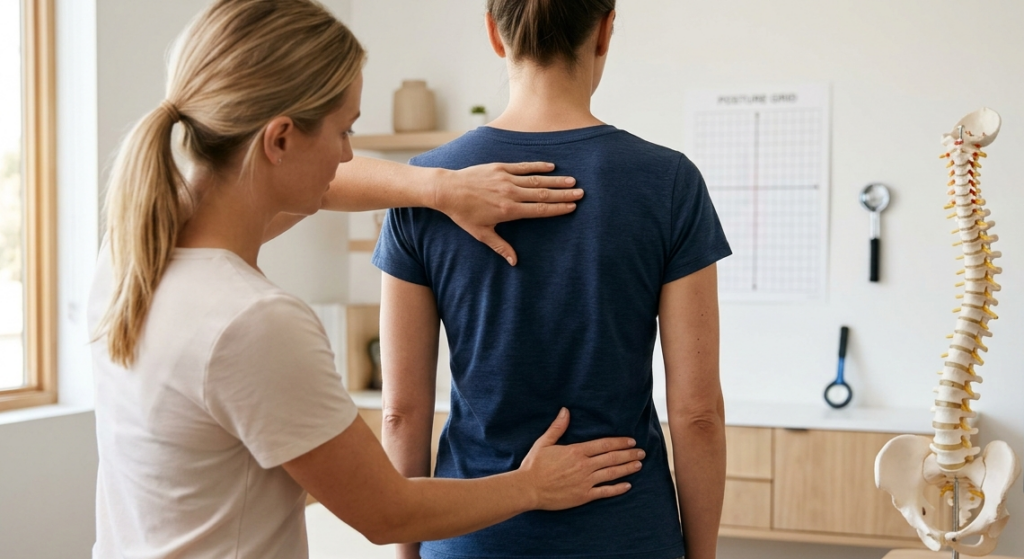

Have you noticed that one shoulder sits higher than the other, your child’s waist looks uneven, or your back seems to curve to one side? These small changes may be early signs of scoliosis, a condition that affects the shape and alignment of the spine.
What is scoliosis? Scoliosis occurs when the spine curves sideways and rotates, often creating a “C” or “S” shape when viewed from behind. It can develop in children, teenagers, and adults. Some people have no symptoms, while others experience changes in posture, back discomfort, or difficulty with certain movements.
Most cases are mild and do not require surgery. However, some curves can worsen over time, particularly during childhood growth spurts. Knowing what causes scoliosis, how doctors diagnose it, and which treatments may help can make it easier to decide when to seek care.
What Is Scoliosis?
Scoliosis is an abnormal sideways curvature of the spine, usually accompanied by some rotation of the spinal bones, called vertebrae. Doctors diagnose scoliosis when the curve measures at least 10 degrees on an X-ray using a measurement called the Cobb angle.
Your spine naturally curves when viewed from the side. These normal curves help support your body and absorb pressure during movement. Scoliosis is different because it creates a sideways curve that may affect the shoulders, ribs, waist, or hips.
Scoliosis can affect the upper back (thoracic spine), lower back (lumbar spine), or both.
How Common Is Scoliosis?
Adolescent idiopathic scoliosis affects approximately 2%–3% of young people, although estimates vary.
It commonly develops between ages 10 and 15, during periods of rapid growth. Both boys and girls can develop scoliosis, but girls are more likely to develop curves that progress enough to require treatment.
Many people with mild scoliosis continue their normal activities without significant limitations.
What Are the Signs of Scoliosis?
The early signs of scoliosis are often changes in posture or body alignment rather than pain.
Common signs include:
-
One shoulder appearing higher than the other
-
Uneven hips or waistline
-
One shoulder blade sticking out more prominently
-
The head appearing off-center over the pelvis
-
The body leaning slightly to one side
-
Clothes hanging unevenly
-
One side of the rib cage appearing higher when bending forward
These changes may develop slowly, making them difficult to notice at first.
Not every uneven shoulder or hip indicates scoliosis. A healthcare professional can examine the spine and determine whether further testing is necessary.
What Are the Symptoms of Scoliosis?
Scoliosis symptoms vary depending on the person’s age, spinal curve, and overall health.
Children and teenagers with mild scoliosis often have no pain or noticeable physical limitations.
When symptoms occur, they may include:
-
Back pain or muscle discomfort
-
Stiffness after sitting or standing for long periods
-
Muscle fatigue around the back
-
Changes in posture or balance
-
Reduced flexibility
-
Leg pain, numbness, or tingling in some adults with nerve compression
Can Scoliosis Cause Back Pain?
Yes, scoliosis can contribute to back pain, but not everyone with scoliosis experiences discomfort.
In children, mild scoliosis is often painless. In adults, back pain may develop alongside age-related changes such as disc degeneration, arthritis, or spinal nerve compression.
Back pain can have many causes, so a proper examination is important before assuming scoliosis is responsible.
What Are the Types of Scoliosis?
There are four main types of scoliosis, each with different causes and treatment considerations.
1. Idiopathic Scoliosis
Idiopathic scoliosis is the most common type. Its exact cause is unknown, although genetics may contribute.
It frequently appears during adolescence, when the spine is growing rapidly.
2. Congenital Scoliosis
Congenital scoliosis develops when spinal bones do not form normally before birth.
Although the condition is present at birth, the curve may become more noticeable as a child grows.
3. Neuromuscular Scoliosis
Neuromuscular scoliosis occurs in people with conditions affecting muscle control or the nervous system.
Examples include cerebral palsy and muscular dystrophy.
4. Degenerative Scoliosis
Degenerative scoliosis develops in adulthood as spinal discs and joints change with age.
It may be associated with back pain, stiffness, or nerve-related symptoms.
What Causes Scoliosis?
What causes scoliosis depends on the type and age of the person affected.
In most adolescent cases, doctors cannot identify one specific cause. This is called idiopathic scoliosis.
Other causes include:
-
Abnormal spinal development before birth
-
Neurological or muscular conditions
-
Age-related degeneration of spinal discs and joints
-
Certain inherited or connective tissue conditions
Poor posture, sleeping in an unusual position, and carrying a heavy backpack do not cause structural idiopathic scoliosis.
A leg-length difference may sometimes create a functional spinal curve, but this is different from structural scoliosis.
What Are the Risk Factors for Scoliosis?
Several risk factors for scoliosis can increase the likelihood of developing a curve or experiencing progression.
-
Age: Adolescent scoliosis often appears during rapid growth.
-
Family history: Having a close relative with scoliosis increases risk.
-
Sex: Girls have a higher risk of significant curve progression.
-
Growth remaining: Children who are still growing may be more likely to experience progression.
-
Underlying medical conditions: Certain neurological, muscular, and congenital disorders increase risk.
Having these risk factors does not guarantee that someone will develop scoliosis.
How Does Scoliosis Affect the Body?
How scoliosis affects the body depends on the size and location of the spinal curve.
A mild curve may cause little more than uneven shoulders or hips. Larger curves can change the shape of the rib cage, affect posture, and place uneven stress on muscles and spinal joints.
In severe cases involving the thoracic spine, the chest may have less room to expand, potentially affecting breathing.
Scoliosis can also affect confidence and body image, especially among teenagers who notice changes in their appearance.
Most people with mild scoliosis do not experience serious physical complications.
How Is Scoliosis Diagnosed?
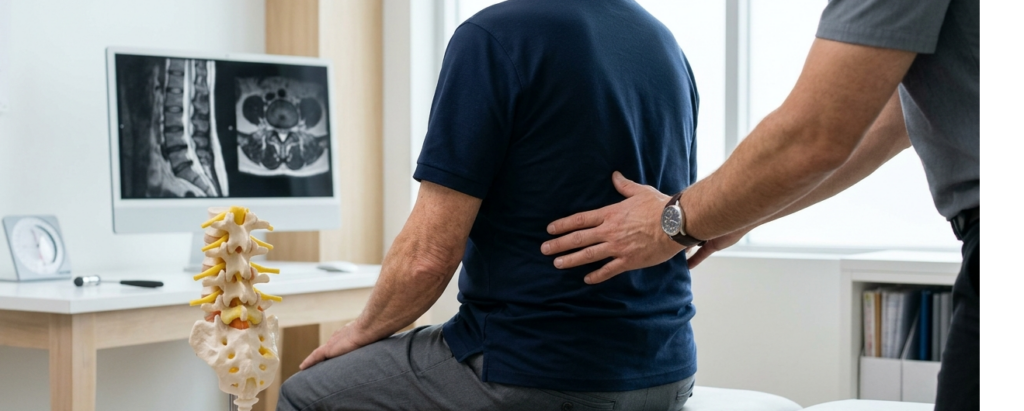
How is scoliosis diagnosed? Doctors typically begin with a medical history and physical examination. If they suspect a spinal curve, standing X-rays can confirm the diagnosis and measure its severity.
What Is Scoliosis Screening?
Scoliosis screening is a physical assessment used to identify possible changes in spinal alignment.
One common examination is the Adam’s Forward Bend Test. During this test, the patient bends forward while the examiner checks for uneven ribs or back muscles.
A scoliometer may also be used to measure trunk rotation.
Screening helps identify possible scoliosis, but it does not confirm the diagnosis. Medical organizations differ in their recommendations for routine screening of children without symptoms.
When Is Scoliosis Diagnosed?
Scoliosis is commonly diagnosed during adolescence, particularly between ages 10 and 15.
However, it can also be identified in infants, younger children, and adults.
Parents may notice uneven shoulders or changes in posture, while adults may discover scoliosis during an examination for back pain.
How Is Scoliosis Measured?
Doctors measure scoliosis using the Cobb angle, which shows the degree of sideways spinal curvature on an X-ray. A Cobb angle of 10 degrees or greater generally confirms a scoliosis diagnosis.
Mild Scoliosis (10–24 Degrees): Mild scoliosis usually causes little or no discomfort. Doctors often recommend regular monitoring to check whether the spinal curve changes over time.
Moderate Scoliosis (25–40 Degrees): Moderate scoliosis involves a more noticeable spinal curve. Bracing may be recommended for children and teenagers who are still growing to help prevent further progression.
Severe Scoliosis (Above 40–50 Degrees): Larger spinal curves may require evaluation by a spine specialist. Surgery may be considered if the curve is severe, continues to progress, or causes significant problems.
These measurements are approximate guidelines. The appropriate scoliosis treatment depends on the patient’s age, remaining growth, curve progression, symptoms, and overall spinal health.
What Is Mild Scoliosis?
Mild scoliosis generally refers to a spinal curve measuring approximately 10–24 degrees.
Many people with mild scoliosis have no symptoms and do not require active treatment.
However, growing children may need regular monitoring because their curves can change during growth spurts.
What Other Diagnosis and Tests May Be Needed?
Additional diagnosis and tests may be recommended in certain situations.
-
Standing X-rays: Confirm the spinal curve and measure the Cobb angle.
-
Scoliometer assessment: Measures trunk rotation during a physical examination.
-
MRI: May be used when symptoms or examination findings suggest a neurological or spinal cord condition.
An MRI is not necessary for every scoliosis diagnosis.
What Are the Complications of Scoliosis?
Most people with mild scoliosis do not develop serious health problems.
However, complications of scoliosis may occur when a curve becomes more severe or progresses over time.
Possible complications include:
-
Increasing spinal curvature
-
Chronic back pain in some adults
-
Changes in posture and rib cage shape
-
Reduced lung function in severe thoracic scoliosis
-
Nerve compression associated with degenerative spinal changes
-
Emotional concerns related to physical appearance
Regular medical monitoring can help identify progression and guide treatment decisions.
Does Scoliosis Get Worse With Age?
Does scoliosis get worse with age? It can, but not every spinal curve progresses.
In children and teenagers, scoliosis may worsen during rapid growth. Once skeletal growth is complete, smaller curves are often more stable.
Adults may experience progression of an existing curve or develop degenerative scoliosis as spinal discs and joints change with age.
The risk of progression depends on the curve’s size, location, underlying cause, and the person’s stage of growth.
How Is Scoliosis Treated?
Scoliosis treatment depends on the size of the spinal curve, the patient’s age, symptoms, and whether the spine is still growing.
Some people only need regular checkups, while others may benefit from bracing, specialized exercises, or surgery. The goal is to prevent significant progression, manage symptoms, and maintain daily function.
1. Observation and Monitoring
Mild scoliosis often does not require immediate treatment.
For children who are still growing, doctors may recommend periodic examinations and X-rays to check whether the curve is changing.
Monitoring is particularly important during growth spurts, when spinal curves may progress more quickly.
2. Bracing for Scoliosis
Bracing is commonly recommended for certain children and teenagers with moderate curves who still have significant growth remaining.
A scoliosis brace helps reduce the risk of further curvature as the spine grows. It does not usually straighten an existing structural curve.
Research supports bracing as an effective way to reduce progression in appropriately selected adolescents, especially when the brace is worn as prescribed.
3. Physical Therapy and Scoliosis Exercises
Physical therapy can help people with scoliosis improve strength, flexibility, posture, and movement.
Specialized approaches, such as the Schroth method, use exercises tailored to the individual’s spinal curve.
These exercises may help with posture, breathing, and back discomfort. However, evidence that exercise alone consistently prevents structural curve progression remains limited.
Physical therapy should complement, rather than replace, recommended bracing or specialist care.
4. Chiropractic Care for Scoliosis
Can a chiropractor help with scoliosis?
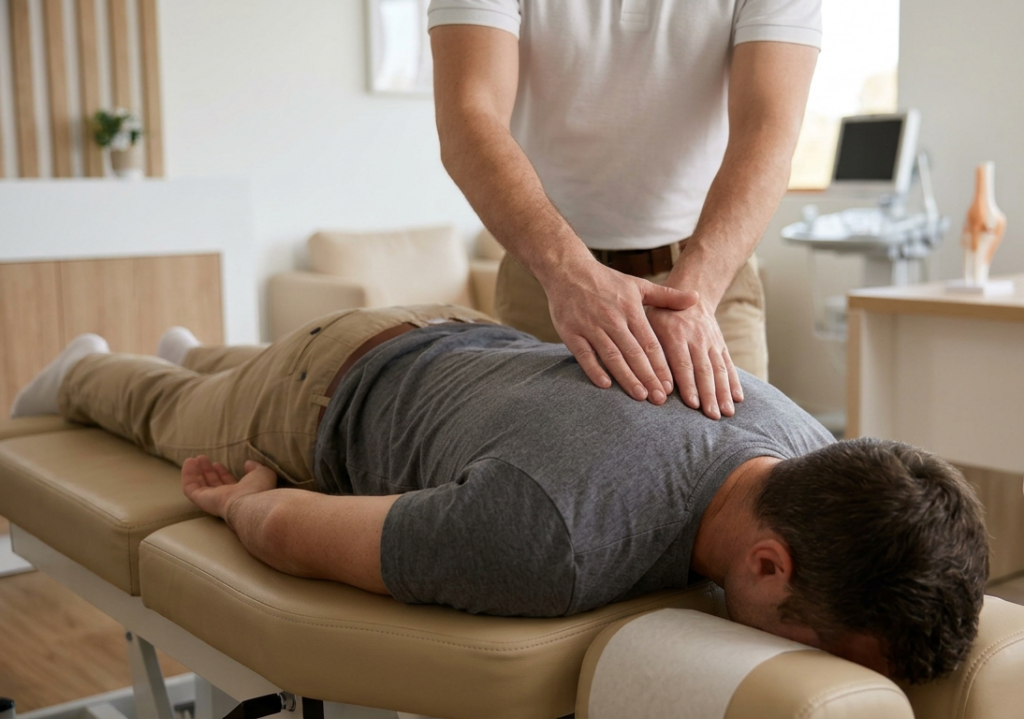
Chiropractic care may help some people manage back discomfort, muscle stiffness, or movement limitations associated with scoliosis.
However, chiropractic adjustments have not been proven to straighten a structural scoliosis curve or prevent it from progressing.
According to the American Academy of Orthopaedic Surgeons, chiropractic treatment may be considered for symptom management, but patients should continue appropriate monitoring with a spine specialist.
5. Scoliosis Surgery
Surgery may be considered for severe or progressively worsening scoliosis, particularly when the curve is likely to continue increasing or causes significant functional problems.
Spinal fusion is a common procedure used to stabilize and correct part of the spinal curvature.
In adolescents, surgery is often discussed when curves approach approximately 45–50 degrees, although recommendations depend on individual circumstances.
Is Scoliosis Surgery Dangerous?
Is scoliosis surgery dangerous? Like other major spinal procedures, it carries risks.
Possible complications include:
-
Infection or bleeding
-
Nerve injury
-
Blood clots
-
Problems with surgical implants
-
Reduced flexibility in the fused portion of the spine
-
Need for additional surgery in some cases
Not everyone with severe scoliosis needs surgery. A qualified spine surgeon can explain the expected benefits, risks, and alternatives based on the patient’s condition.
Can Scoliosis Be Corrected Without Surgery?
Many people with scoliosis can manage the condition without surgery.
For mild curves, regular monitoring may be enough. Children with moderate curves may benefit from bracing, while physical therapy can support posture, mobility, and comfort.
However, managing scoliosis is different from permanently straightening the spine.
Bracing helps prevent progression during growth but generally does not correct an existing structural curve. Chiropractic adjustments and general exercise have not been shown to reliably straighten structural scoliosis.
The most appropriate approach depends on the curve’s severity, progression, and the person’s age.
When Should You See a Healthcare Professional?
Consider scheduling an evaluation if you notice uneven shoulders, changes in waist alignment, a visible spinal curve, or persistent back discomfort.
An assessment is especially important if:
-
Your child’s posture changes during a growth spurt.
-
A previously diagnosed curve appears to be worsening.
-
Back pain interferes with daily activities.
-
You experience persistent leg pain, tingling, or numbness.
-
You notice new changes in balance or walking.
Seek urgent medical attention for new or worsening leg weakness, loss of bladder or bowel control, or numbness around the groin. Sudden severe breathing difficulty also requires emergency care.
Early diagnosis helps healthcare professionals determine whether monitoring or treatment is necessary.
Chiropractic Care and Spinal Health at Crystal Grove Chiropractic in Lutz, FL
Living with scoliosis may sometimes involve back discomfort, muscle tension, or stiffness that makes everyday activities uncomfortable. While chiropractic care cannot correct structural scoliosis, it may help certain patients manage related musculoskeletal symptoms.
At Crystal Grove Chiropractic, Dr. Jacob Henricksen provides personalized chiropractic care focused on evaluating spinal and joint concerns, understanding patients’ symptoms, and identifying appropriate care options.
The clinic offers several services for patients in Lutz, FL.
Chiropractic and Wellness Services Available
These services should not be interpreted as scoliosis correction treatments. In particular, pediatric chiropractic care does not replace specialist monitoring or bracing when a child has progressive scoliosis.
Schedule a Chiropractic Consultation in Lutz, FL
If you’re experiencing back pain, stiffness, or mobility concerns, Crystal Grove Chiropractic can discuss whether its available services may be appropriate for your symptoms.
Patients with suspected or diagnosed scoliosis should also receive appropriate medical evaluation and specialist monitoring.
Crystal Grove Chiropractic
Location: Lutz, FL
Address: 250 Crystal Grove Blvd, Lutz, FL 33548
Phone: +1 813-776-1480
Website: Chiropractor in Lutz, FL
Map: Crystal Grove Chiropractic – Lutz, FL
Frequently Asked Questions About Scoliosis
What Are the Early Signs of Scoliosis?
Early signs include uneven shoulders, one shoulder blade sticking out, an uneven waistline, or the body leaning to one side. Many people with mild scoliosis have no pain, so changes in posture may be the first noticeable sign.
Can Scoliosis Go Away on Its Own?
Some very small curves in young children may improve naturally, but most structural scoliosis curves do not disappear on their own. Many mild curves remain stable without active treatment.
Can You Live a Normal Life With Scoliosis?
Yes. Most people with scoliosis can work, exercise, play sports, and participate in everyday activities. Some may need regular monitoring or treatment depending on the curve’s severity and associated symptoms.
What Exercises Are Good for Scoliosis?
Walking, swimming, strengthening exercises, and individualized physical therapy may help maintain fitness and mobility. Scoliosis-specific programs, such as Schroth exercises, may also be recommended. Exercise plans should be tailored to the person’s curve and physical abilities.
Can a Chiropractor Straighten a Scoliosis Curve?
There is no strong evidence that chiropractic adjustments can permanently straighten structural scoliosis. Chiropractic care may help manage certain related symptoms, but it should not replace medical monitoring, bracing, or specialist treatment when needed.
Can Scoliosis Be Prevented?
Most cases of idiopathic scoliosis cannot be prevented because their exact cause is unknown. Maintaining good physical fitness supports overall health, but it does not guarantee that scoliosis will not develop.
Does Everyone With Scoliosis Need Surgery?
No. Most people with scoliosis do not require surgery. Mild curves often need only monitoring, while some moderate curves in growing children may benefit from bracing. Surgery is generally considered for more severe or progressive curves.
Conclusion
Understanding what is scoliosis helps you recognize early signs, understand potential causes, and explore appropriate treatment options.
Although scoliosis can affect people of all ages, many cases are mild and do not require surgery. Regular monitoring, timely evaluation, and evidence-based treatment can help manage the condition and reduce the risk of progression.
If you notice changes in spinal alignment or experience persistent back discomfort, consult a qualified healthcare professional.
For related musculoskeletal concerns in Lutz, FL, Crystal Grove Chiropractic offers chiropractic services and can discuss appropriate care options based on your symptoms and health history.
About the Author: Dr. Jacob Henricksen
Dr. Jacob Henricksen graduated from Palmer College of Chiropractic in Davenport, Iowa, where he also earned his Bachelor of Science degree. He completed a clinical internship at the Spine and Sports Center of Chicago.
His professional background includes experience in interdisciplinary settings involving chiropractic, physical therapy, and medical care. He also holds a Certification in Mechanical Diagnosis and Therapy (Cert. MDT), commonly associated with the McKenzie Method.
At Crystal Grove Chiropractic in Lutz, Florida, Dr. Henricksen focuses on individualized assessment and chiropractic care for musculoskeletal conditions