
Whiplash Treatment in Lutz, FL: How Chiropractic Care Helps You Recover
Whiplash can turn a normal day in Lutz into weeks of neck aches, headaches, and limited movement. Many people try to “wait it out,” only to discover the stiffness lingers and daily tasks become harder. As a chiropractor at Crystal Grove Chiropractic, I want you to know that you don’t have to guess your way through recovery. Chiropractic care is a frontline, conservative approach designed to help your neck move better, calm irritated tissues, and guide you back to normal activity safely.
What is whiplash? Whiplash is a neck injury caused by a rapid back-and-forth motion of the head, most often from car collisions, sports, or falls. It can strain muscles, ligaments, joints, and sometimes irritate nerves, leading to pain, stiffness, and headaches.
Table of Contents
- What Is Whiplash and Why It Matters
- Common Causes of Whiplash in Lutz
- Signs and Symptoms to Watch For
- How Chiropractic Care Helps Whiplash
- What to Expect at Crystal Grove Chiropractic
- Practical Tips for Healing and Prevention
- When to See a Chiropractor
- When to Seek Emergency or Medical Care
- Myths vs. Facts About Whiplash and Chiropractic
- Final Thoughts for Our Lutz Community
What Is Whiplash and Why It Matters
Whiplash happens when the neck is whipped into a quick acceleration-deceleration motion. Think of your head as a bowling ball on a flexible stack of joints and soft tissues. In a split second, those tissues can be overstretched, irritated, and overwhelmed.
Even a “minor” fender-bender can create enough force to strain the neck. Symptoms sometimes show up 24–48 hours later. Taking a proactive approach early—especially with a chiropractor trained in spinal mechanics—often helps reduce stiffness, improve motion, and support a smoother recovery.
Common Causes of Whiplash in Lutz
Here in Lutz and the North Tampa area, rear-end collisions are a frequent trigger. Busy routes like US-41, SR-54, and Dale Mabry Highway see plenty of stop-and-go traffic, which can catch anyone off-guard. But car accidents aren’t the only cause. Whiplash can also happen with sports impacts, sudden falls, or even an unexpected jolt on a roller coaster.
During impact, your head moves before your muscles have time to protect you. The neck joints, discs, ligaments, and muscles can all be involved, which is why symptoms can vary from person to person.
Signs and Symptoms to Watch For
Whiplash doesn’t look the same for everyone. Some people feel sore right away. Others wake up the next day with new pain or limited motion. Common symptoms include:
- Neck pain and stiffness
- Pain with turning or looking up/down
- Headaches (often starting at the base of the skull)
- Upper back and shoulder soreness
- Jaw discomfort
- Dizziness or a “heavy” head feeling
- Tingling or aching that travels into the arm
- Fatigue
- Trouble concentrating
- Difficulty getting comfortable to sleep
These symptoms are real—and they’re treatable. The key is to get a thorough evaluation and begin the right plan quickly.
How Chiropractic Care Helps Whiplash
Chiropractic care is a frontline, non-drug, hands-on approach that targets the core problems of whiplash: restricted joints, irritated soft tissues, and altered movement patterns. Our goal is to restore normal mechanics to the spine and surrounding areas, so your body can heal and you can move with less pain.
Here’s how chiropractic fits in:
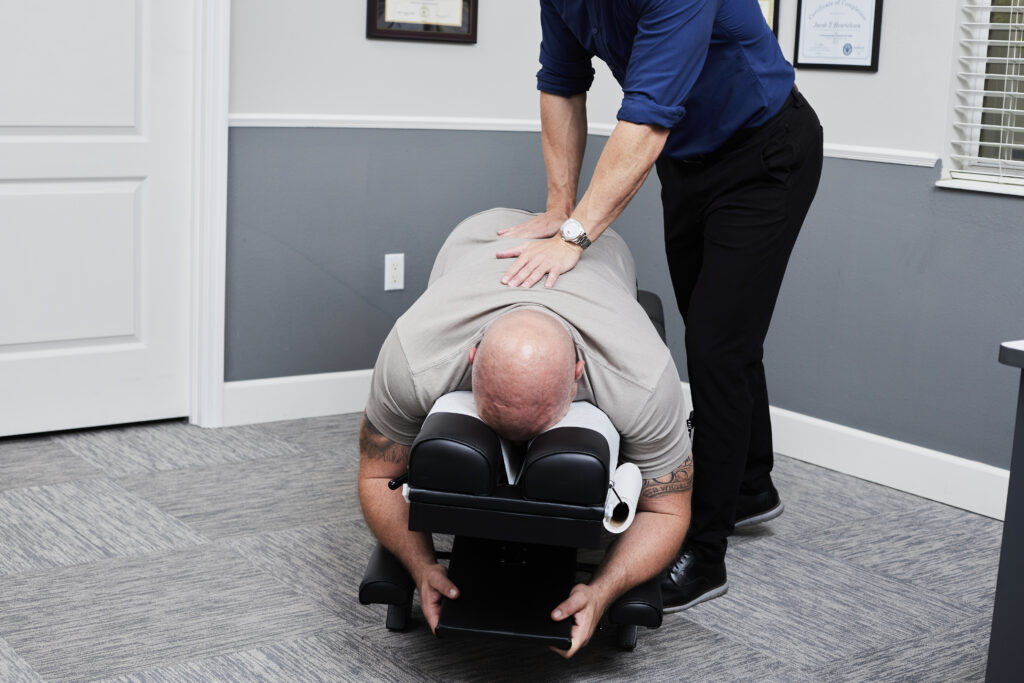
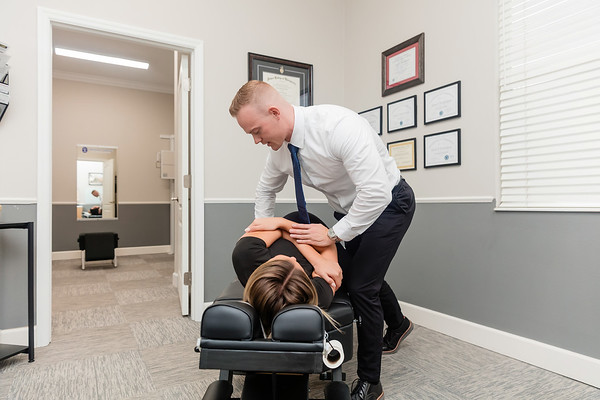
- Restoring joint motion: Spinal adjustments and gentle mobilization help reduce stiffness and improve the way the neck segments move together. This can ease protective muscle guarding and improve comfort in daily activities.
- Calming soft-tissue irritation: Soft-tissue techniques (for example, myofascial work) help relax tight muscles and reduce trigger-point tenderness that often shows up after whiplash.
- Guided exercise and postural retraining: Targeted exercises build stability in the deep neck flexors and shoulder blade stabilizers. When your support system is stronger, your neck doesn’t have to work as hard.
- Education and pacing: You’ll learn how to move safely, avoid aggravating habits, and return to work, sports, and driving with confidence.
Research suggests that manual therapy and exercise can help many patients with neck pain related to mechanical causes, like whiplash. Evidence from reputable organizations indicates conservative care—especially approaches focused on movement and function—can reduce pain and improve mobility for many people with neck complaints. For more, see resources below:
What to Expect at Crystal Grove Chiropractic
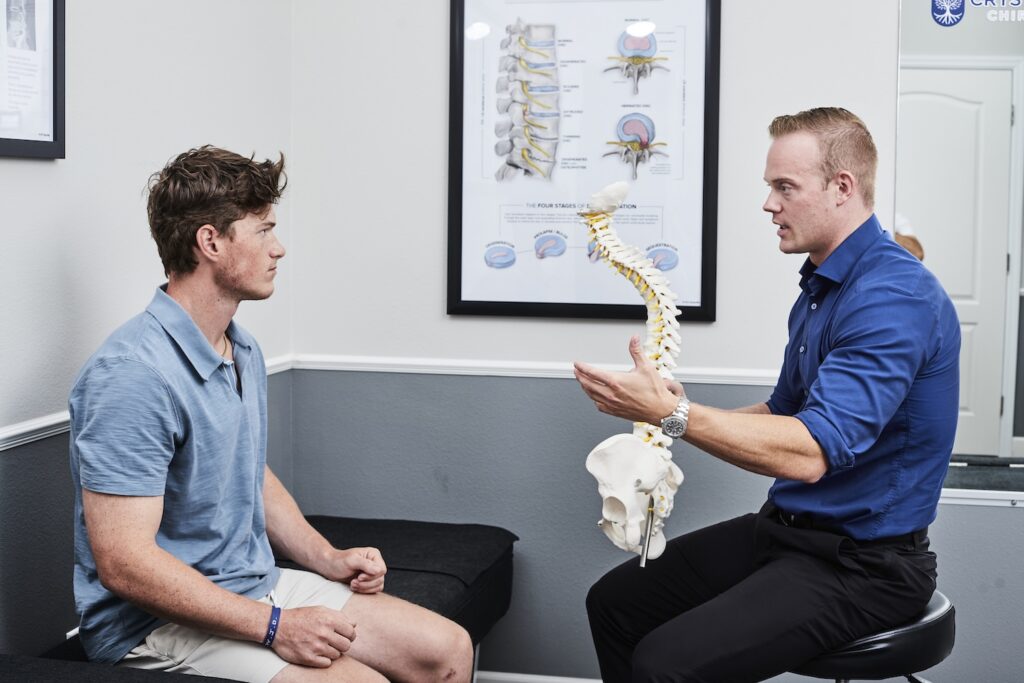
Your first visit is about clarity and a plan. We start with a detailed history of how your whiplash occurred, your symptoms, and your health background. Then we perform a focused exam: posture and movement assessment, orthopedic and neurological checks, palpation of the spine, and range-of-motion testing.
If there are signs of a more serious injury—like suspected fracture, dislocation, or significant nerve involvement—we’ll order imaging or refer to the appropriate medical specialist right away. Patient safety comes first, always.
When whiplash is appropriate for conservative chiropractic care, we’ll outline a personalized plan. This may include gentle spinal adjustments, low-force mobilization, soft-tissue care, and progressive home exercises. Treatment is adapted to your presentation, and we continually reassess to ensure you’re progressing appropriately.
| Recovery Phase | Typical Goals | Chiropractic Focus at Crystal Grove Chiropractic |
|---|---|---|
| Acute (first 1–2 weeks) | Reduce pain, protect tissues, encourage gentle movement | Low-force adjustments or mobilization, soft-tissue work, activity pacing, home care guidance |
| Subacute (2–6 weeks) | Restore motion and control | Progressive adjustments, targeted exercises, postural retraining, ergonomic coaching |
| Rehab/Return to activity (6+ weeks) | Build strength, endurance, and confidence | Stabilization progressions, work/sport-specific strategies, long-term prevention |
Practical Tips for Healing and Prevention
Healing from whiplash is a process, and the right habits make a real difference. These simple, safe strategies often support better outcomes alongside your in-office care:
- Keep moving (gently): Short, frequent walks and gentle neck movements within comfort are better than staying completely still. Avoid aggressive stretching early on.
- Optimize sleep support: A supportive pillow and side-lying or back-lying position can reduce morning stiffness. Keep your neck neutral—avoid sleeping twisted.
- Use cold or heat thoughtfully: In the first 48 hours, brief cold applications can help ease soreness. After that, many people find gentle heat helpful for muscle tension. Use either for short intervals and never directly on bare skin.
- Set up your car and workspace: Adjust mirrors so you don’t have to twist repeatedly. At your desk, bring the screen to eye level and keep the keyboard close.
- Lighten your load: Swap heavy purses or backpacks for lighter options. Distribute weight evenly across both shoulders when possible.
- Hydrate and pace activity: Muscle and joint tissues function better when you’re hydrated. Gradually build activity rather than jumping back into strenuous tasks.
When to See a Chiropractor
If you’ve experienced a collision, sports impact, or sudden neck jolt—even if symptoms seem mild—an evaluation is a smart step. Early chiropractic assessment helps identify restricted joints, soft-tissue strain, and movement compensations before they become chronic. Consider scheduling with our Lutz clinic if you notice any of the following:
- Neck pain, stiffness, or headaches lasting more than 24–48 hours after an incident
- Trouble turning your head to check blind spots or look over your shoulder
- Soreness across the upper back or between the shoulder blades
- Recurring headaches that start at the base of your skull
- Dizziness when moving the neck, or a sense of heavy, fatigued neck muscles
- Pain, tingling, or aching that travels into the shoulder or arm
When to Seek Emergency or Medical Care
While whiplash is often manageable with conservative care, certain signs require urgent medical evaluation. Seek immediate care or call 911 if you have any of the following after an injury: severe or worsening headache, loss of consciousness, confusion, slurred speech, double vision, significant weakness or numbness in the arms or legs, loss of bladder or bowel control, severe midline neck tenderness, or suspected fracture or dislocation. If you’re unsure, err on the side of caution. We will always direct you to the appropriate level of care.
Myths vs. Facts About Whiplash and Chiropractic
Myth: “If pain doesn’t start right away, I’m fine.”
Fact: Whiplash symptoms often show up hours or even a day later as inflammation builds. A timely chiropractic assessment helps ensure small issues don’t evolve into bigger ones.
Myth: “Rest until it’s gone.”
Fact: Prolonged rest can make stiffness worse. Gentle, guided movement is usually helpful early on, and a chiropractor can show you what’s safe and effective.
Myth: “Chiropractic is only for severe neck pain.”
Fact: Chiropractic is frontline care for a wide range of neck complaints—from mild stiffness to more significant whiplash injuries. Early care can support better motion and comfort.
Myth: “All adjustments are forceful.”
Fact: Techniques are tailored to your condition. In acute whiplash, we often start with low-force or instrument-assisted methods and progress as appropriate.
Final Thoughts for Our Lutz Community
If a recent fender-bender, sports collision, or fall left your neck feeling “off,” don’t wait and hope for the best. At Crystal Grove Chiropractic in Lutz, we see whiplash often, and we understand how it affects your work, sleep, and peace of mind. Our approach is clear: assess thoroughly, treat what we find, and guide you step by step back to the activities you love—safely and confidently.
If you have questions about your specific situation, we’re here to help. A focused chiropractic evaluation can provide the clarity and direction you need.
FAQs
How soon after a car accident should I see a chiropractor for whiplash?
As soon as you can safely do so—ideally within a few days. Early evaluation helps address restricted motion and soft-tissue irritation before they become entrenched.
Do I need imaging before chiropractic care?
Not always. We decide based on your history and exam. If there are red flags or suspected structural injury, we’ll order imaging or refer appropriately first.
Are chiropractic adjustments safe for whiplash?
For most people, yes—when delivered by a trained chiropractor after a proper evaluation. Techniques are tailored to your condition, and low-force options are available when needed.
How long does whiplash recovery take?
It varies. Many improve over several weeks with consistent care and home strategies. Your plan is individualized and adjusted based on your response.
Can whiplash cause headaches?
Yes. Irritated joints and muscles at the top of the neck commonly refer pain to the head. Chiropractic care often addresses these contributors.
Should I avoid exercise after whiplash?
Avoid strenuous activity early on, but gentle, guided movement is encouraged. We’ll show you safe progressions to support recovery.
TL;DR
- Whiplash is a rapid neck strain from impacts like car accidents or sports; symptoms may be delayed.
- Chiropractic is a frontline approach that restores motion, calms soft tissues, and guides safe return to activity.
- See a chiropractor promptly if pain, stiffness, or headaches persist beyond 24–48 hours after an incident.
- Seek emergency care for red flags like severe headache, neurological changes, or suspected fracture.
- In Lutz, Crystal Grove Chiropractic provides thorough evaluation and tailored, evidence-informed care for whiplash.