Back pain can bring your day to a halt—whether it’s a sharp twinge when you bend or a constant ache that wears you down. At Crystal Grove Chiropractic here in Lutz, our focus is straightforward: deliver precise, evidence-informed chiropractic adjustments that help your spine move better and feel better. If you’re wondering what actually happens during a back pain adjustment, this guide will walk you through every step so you feel prepared and confident.
You’ll learn what a chiropractic adjustment is, the techniques we may use, what an appointment feels like, safety considerations, and when to seek care. My goal is to demystify the process and show you how chiropractic serves as a frontline, non-invasive solution for many types of back pain.
What Is a Back Pain Adjustment?
A back pain adjustment is a precise chiropractic technique that restores normal motion to restricted spinal joints. By improving joint mechanics, it can reduce irritation, ease muscle guarding, and support healthy nerve function. The goal is better movement first—pain relief often follows as function improves.
Your spine is a dynamic system of joints, discs, ligaments, muscles, and nerves. When certain spinal joints lose healthy motion—often from poor posture, repetitive stress, or a minor injury—surrounding muscles tense up and nerves may become irritated. This can lead to stiffness, guarded movement, and pain.
A chiropractic adjustment is designed to address the mechanical problem at the joint level. By restoring motion to a restricted segment, we help reduce local stress, improve muscle coordination, and support the spine’s ability to move the way it’s built to move. Many patients notice greater ease when bending, twisting, or getting up from a chair after an adjustment.
Evidence-based guidelines recognize spinal manipulation as a frontline, non-pharmacologic option for acute and chronic low back pain. Research suggests it can help reduce pain and improve function for many people when delivered by trained clinicians within a comprehensive, patient-centered plan. For patients in Lutz seeking a hands-on, conservative approach, chiropractic care is a direct path to addressing the root of many mechanical back issues.
For additional reading on conservative care, you can explore resources from the American College of Physicians and the National Center for Complementary and Integrative Health, which discuss spinal manipulation as part of guideline-supported options for low back pain: ACP Clinical Guidelines, NCCIH: Spinal Manipulation.
We begin with a conversation. You’ll tell us where it hurts, when it started, and what makes it better or worse. We’ll ask about your daily habits, stressors, and work setup. These details help us pinpoint the likely source of your back pain.
Next comes a focused exam. We check posture, joint motion, muscle tone, and simple orthopedic and neurologic screens. We look for patterns—like a stiff segment at the low back or a hip restriction that’s overloading your lumbar spine. If we suspect something that requires imaging or medical referral, we’ll discuss that clearly and coordinate next steps.
If your exam indicates you’re a good candidate for chiropractic care, we’ll explain your personalized plan and, when appropriate, begin treatment the same day.
Chiropractic Techniques We May Use for Back Pain
Different backs need different approaches. At Crystal Grove Chiropractic, we tailor techniques to your body, comfort level, and goals. Here are methods you may experience during a back pain adjustment:
High-Velocity, Low-Amplitude (HVLA) Adjustment: Often called a “diversified” adjustment, this is a quick, precise thrust to a specific joint. You may hear a “pop,” which is gas releasing from the joint as pressure changes—similar to opening a soda can. The sound isn’t the goal; improved motion is.
Drop-Table Adjusting: A specialized table section gently drops as we deliver a controlled force. The drop assists the adjustment, allowing for a lighter feel while still restoring motion. Many patients find this method very comfortable.
Flexion-Distraction: This gentle, rhythmic technique uses a segmented table to create mild traction and flexion at the low back. It’s helpful when we want to reduce pressure through the lumbar joints and surrounding tissues with a low-force approach.
Instrument-Assisted Adjusting: We may use a handheld instrument to deliver a quick, low-force impulse to a restricted joint. It’s a good option for sensitive areas or for patients who prefer minimal manual thrust.
Spinal Mobilization: Instead of a quick thrust, mobilization uses slower, graded movements to encourage joint motion. This can be ideal where a softer touch is needed.
Targeted Soft-Tissue Work: Tight, protective muscles often accompany joint restriction. We may perform focused myofascial work to help those muscles relax so your adjustment holds better and you move more freely.
What an Adjustment Feels Like—Step by Step
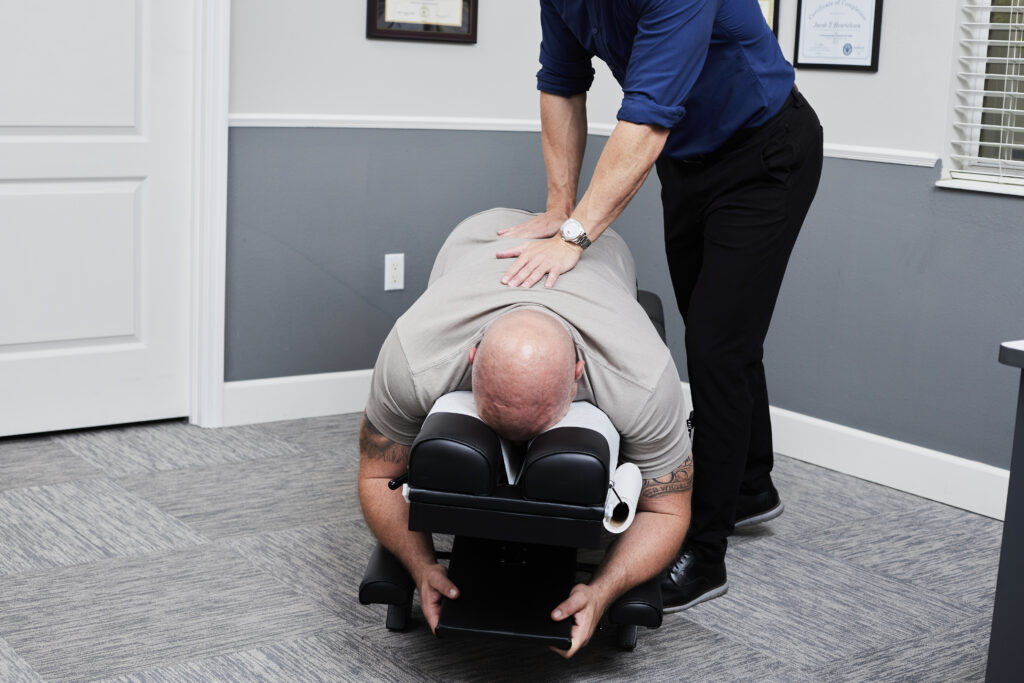
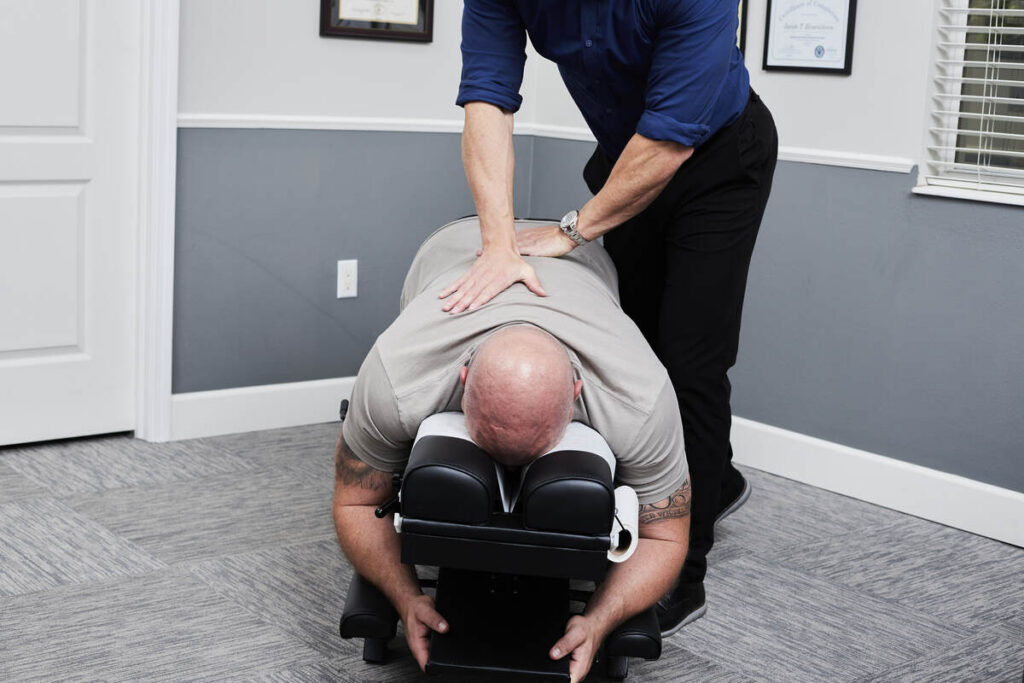
Positioning: We’ll position you comfortably on the table—on your side, back, or stomach—depending on the area we’re adjusting. Clear instructions and gentle setup help you relax.
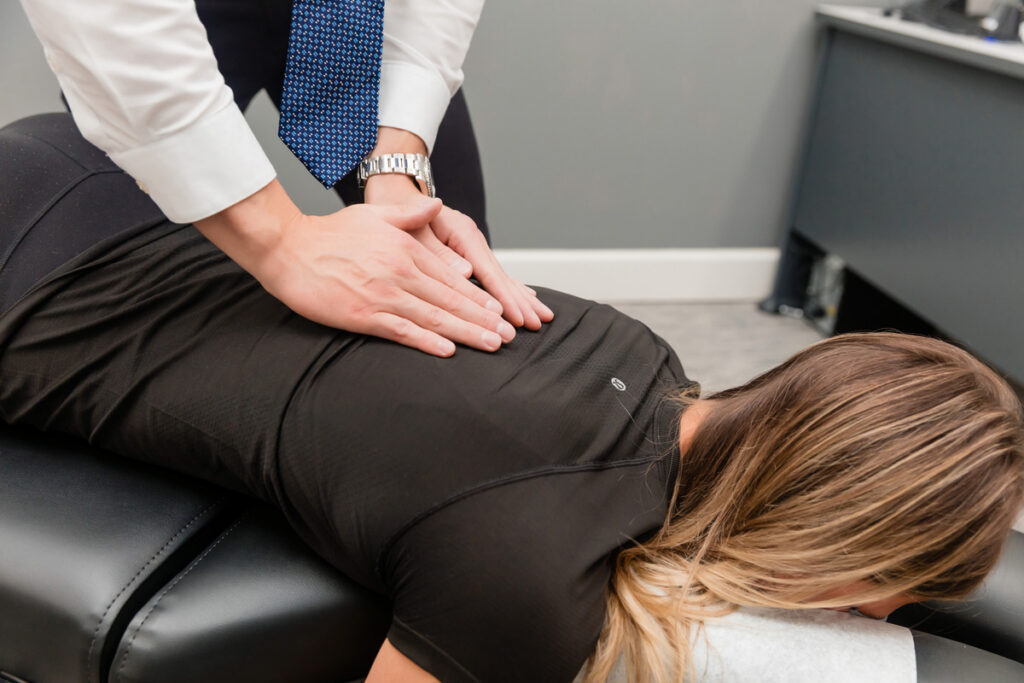
Contact and “preload”: We take a secure contact on the joint and gently bring it to tension. You’ll feel a sense of “take up” where the joint’s natural slack ends. This is a safe, controlled setup.
The adjustment: We deliver a quick, precise impulse in a specific direction. It’s over in a split second. Some patients feel immediate ease or a sense of “release”; others notice gradual improvement over the next 24–48 hours.
Recheck: We reassess the segment’s motion and your comfort. If needed, we add mobilization or soft-tissue work to reinforce the change.
Guidance: You’ll leave with simple, individualized recommendations to protect your progress—like how to sit, stand, and move in ways that support your spine while it heals.
Safety, Comfort, and Customization
Your safety comes first. We screen for conditions where adjustments should be modified or avoided. When necessary, we choose lower-force methods that are gentle yet effective.
Care is customized for every body. We adapt techniques for older adults, athletes, people with physically demanding jobs, and those with sensitive backs. Expect clear explanations and informed consent before any procedure.
It’s common to feel mild soreness—similar to a new workout—after your first few visits as your body adapts to moving better. This usually fades quickly. If anything feels off, let us know. We adjust the plan to keep you comfortable and progressing.
After Your Adjustment: What to Expect
Right after your visit, many patients feel lighter, looser, and more mobile. Some notice changes over the next day as inflammation settles and muscles recalibrate. Gentle walking, an easy-paced day, and good hydration are helpful.
If you experience mild soreness, a brief cold pack on the area can be soothing within the first 24 hours. After that window, some patients prefer brief, comfortable heat. Keep it simple and avoid extremes—your body is already doing the work to rebalance.
Most importantly, keep moving. Short, frequent movement breaks are more helpful than long periods of sitting or lying down. We’ll share movement habits tailored to your exam findings so your back continues to improve between visits.
Results and Care Plans: How Many Visits?
Everyone’s timeline is different. Recent, uncomplicated back pain may respond in a handful of visits, while longer-standing or recurrent issues often need a series of appointments to retrain motion and stability. Our plans are phased: reduce pain, restore function, and then reinforce healthy movement to help prevent flare-ups.
We reassess regularly. If progress stalls, we refine the strategy. When appropriate, we layer in simple home strategies—like posture cues and movement hygiene—to help your results last. Chiropractic remains the foundation of care, with lifestyle coaching used to support your outcomes.
Consider scheduling if back pain is limiting daily life, interfering with sleep, or returning frequently. If you notice stiffness when you wake, pain with sitting or driving, or trouble bending or lifting, an evaluation can pinpoint the source and address it early.
Many patients come in after yardwork strains, a long workweek at a desk, travel days, or returning to the gym. If you live or work around Lutz and want a hands-on, first-line approach to back pain, we’re here to help you get moving again with a clear plan.
When to Seek Medical or Emergency Care
Some signs need urgent medical evaluation. Seek immediate care—rather than chiropractic—if you have new, severe weakness in a leg, loss of bowel or bladder control, numbness in the saddle area, unexplained fever with back pain, or back pain after significant trauma. If your history or exam suggests a medical cause for pain, we’ll refer promptly and coordinate with other providers.
Myths vs Facts About Back Pain Adjustments
Myth
Fact
“The pop means something is being put back in place.”
The sound is gas releasing from the joint as pressure changes. The goal is improved motion, not “putting bones back in.”
“Adjustments are one-size-fits-all.”
Techniques are customized. We choose methods—manual, drop-table, instrument, or mobilization—based on your exam and comfort.
“If it doesn’t hurt right now, I don’t need care.”
Restricted motion can exist without pain. Early care can restore healthy mechanics and help prevent flare-ups.
“Once you start, you have to go forever.”
Care plans are individualized and goal-driven. Many patients choose periodic wellness visits to maintain spinal health—your choice, your goals.
Our Local Approach in Lutz
Our community is active—from weekend yard projects to long commutes on the Veterans Expressway. Those routines can stress the spine. At Crystal Grove Chiropractic in Lutz, we deliver focused, chiropractic-first care to help you move comfortably through work, home, and the activities you love.
If you have questions about whether a back pain adjustment is right for you, reach out. We’re here to listen, examine carefully, and guide you with a clear, personalized plan.
For most people, chiropractic adjustments performed by a licensed chiropractor are considered safe. We screen for contraindications and use techniques that match your needs and comfort.
Will the adjustment hurt?
Most adjustments are not painful. You may feel pressure and a quick impulse. Mild soreness—like after a new workout—can occur briefly as your body adapts.
How soon will I feel better?
Some patients feel relief right away; others improve over 24–48 hours. The timeline depends on factors like how long the issue has been present and your daily habits.
Do I need X-rays before getting adjusted?
Not always. We order imaging only when your history and exam suggest it’s necessary for safety or to clarify a diagnosis.
What if I don’t like “popping” sounds?
We have low-force options such as instrument-assisted adjusting, mobilization, and drop-table methods that minimize or avoid joint cavitation.
TL;DR
Back pain adjustments restore motion in restricted spinal joints, helping reduce irritation and muscle tension.
Techniques are customized—manual, drop-table, instrument-assisted, mobilization, and soft-tissue work as needed.
Expect a precise, comfortable process with safety screening and clear explanations at every step.
Mild, short-lived soreness can occur; keep moving and follow simple guidance to support results.
Seek urgent medical care for red flags like severe weakness, loss of bowel/bladder control, or pain after major trauma.
Jacob Henricksen
Dr. Jacob Henricksen graduated from Palmer College of Chiropractic, the very first Chiropractic college, in Davenport Iowa.
Dr. Henricksen is originally from a small town in Southeast Alaska. He started his undergraduate studies at the University of Alaska Anchorage in Anchorage, AK and then completed his undergraduate at Palmer College of Chiropractic receiving his Bachelor of Science degree.
Back pain disrupting your life? Dr. Henricksen at Crystal Grove Chiropractic in Lutz, FL explains common causes and how chiropractic care brings lasting relief.
Untreated whiplash can lead to chronic pain, headaches, and lasting limitations. Learn why early care matters and how chiropractic treatment in Lutz, FL can help.
Love this place. Compassionate, friendly staff and Dr. Hendricksen is just the best. I've been a patient of his for about 3 + months and my back and posture is so much better. Would recommend Dr. Hendricksen to anyone that wants to feel better about themselves.
5* Highly Recommend Crystal Grove Chiropractic
I don't usually write reviews, but Crystal Grove Chiropractic deserves every bit of this 5-star rating.
I'll admit, I'm naturally skeptical when it comes to medical treatments and procedures. In fact, I'm one of those people who avoids going to the doctor whenever possible. After years of sports-related injuries, combined with the wear and tear of everyday projects around the house, I developed severe lower back pain. The pain became so intense that I experienced muscle spasms that made it difficult to walk, sit comfortably, or even drive.
Initially, I followed my family doctor's advice and hoped the pain would go away with aspirin and time. Unfortunately, it didn't. After stubbornly suffering for more than a week, I heard an ad for Crystal Grove Chiropractic and decided to give it a try.
I can't say enough good things about the team. Dr. Jacob is knowledgeable, professional, and genuinely cares about his patients. Savannah at the front desk is always welcoming, friendly, and helpful. Most importantly, they encouraged me to trust the process.
The results didn't happen overnight, but after a few sessions, I noticed a significant improvement and the pain gradually disappeared. Today, I continue going for maintenance and stretching, and I feel better than I have in a long time.
Thank you, Dr. Jacob, Savannah, and the entire team at Crystal Grove Chiropractic. You've turned a lifelong skeptic into a believer. I highly recommend them to anyone dealing with back pain or looking for quality chiropractic care.
Trust the process. It works!
I genuinely don't have the words to express how life-changing this experience has been. Walking into this office felt like carrying the weight of the world on my shoulders. Walking out felt like I had been completely reborn. The level of professionalism, expertise, and genuine care is beyond anything I've ever experienced in healthcare.
The doctor’s assistant is so lovely that I’d almost consider throwing my back out again just to come back and visit.
The attention to detail was exceptional. Every question was answered with care, every concern was addressed patiently, and each visit left me feeling better than the last. It’s rare to find someone who combines such skill with genuine compassion.
If this place was a person, I’d be asking them to be my emergency contact. Five stars is simply not enough. I’d give 52 stars, a standing ovation, and the keys to my house if that were an accepted review format.
Do yourself a favor: BOOK THE APPOINTMENT!!!Worst case, your spine gets an upgrade. Best case, you’ll start recommending this place to complete strangers in the grocery store like I apparently do now.
I have had chronic neck pain for over a decade. I came to Crystal Grove after a neck injury with 10/10 pain. I couldn't move my neck at all pretty much. After just one session, I had significant relief. Now after a few months, I don't have pain in my neck, just stiffness from holding my stress there if anything. To be able to move without significant pain is liberating. Dr. Henricksen never forces anything and makes sure you feel comfortable with the adjustments before administering them. I recommend for anyone to come here who is experiencing any type of spinal discomfort.
I can’t recommend Dr. Jacob at Crystal Grove Chiropractic enough! From the very first visit, I felt welcomed and genuinely cared for. Dr. Jacob is knowledgeable, attentive, and takes the time to make sure you understand your treatment. I always leave feeling so much better than when I arrived. If you’re looking for a chiropractor who truly cares about helping you feel your best, Dr. Jacob is the one to see!
After seeing different chiropractors for the past five years, I can honestly say Crystal Grove Chiropractic has given me the most relief I’ve experienced. I’ve been a patient here for about three months, and the difference has been incredible. Dr. Jacob Henrickson truly listens and tailors my treatment plan to my specific needs instead of taking a one size fits all approach, I always feel like my care is personalized. The decompression table has been a game changer. It has made such a noticeable difference in my pain and overall comfort, and it’s something I look forward to during my visits. If you’re looking for a chiropractor who takes the time to understand your needs and provides compassionate, effective care, I highly recommend Crystal Grove Chiropractic. I’m so grateful I found them!
Dr H has been absolutely phenomenal. Everything from the first day i met him and where were at in care he has been very professional and straightforward. If you’re looking for a chiropractor who goes above and beyond this is your guy !
Very thorough and solid attention to detail. Your concerns will be addressed. Issues will be worked through. Awesome friendly office and very open and honest. You will not be disappointed in the level of service.
I was referred to Dr Henricksen by my former chiropractor, for sciatic and lower back pain. He came up with a treatment plan that has been very successful. He and his staff have been great, friendly and accommodating to my schedule. Highly recommended!
My to go place to feel my best. I can go there daily. I feel so good after each session. Dr Jacob Henricksen explained the plan of action to follow, we did x rays to see what was bothering my back. Very professional and courteous. The whole overall experience is just so good. The office is clean and cool, the stretching beds are the best, most of the time I end up napping. Staff is so friendly, accommodating and prompt. I found them on social media and they were less than 10 minutes from my house and I’m so glad I did.
I honestly don’t even know where to start. I came in feeling like a “project from head to toe,” dealing with a lot of ongoing issues, and I wasn’t sure what to expect. From the very first visit, Dr. Henricksen at Crystal Grove Chiropractic has been the most gentle, kind chiropractor I’ve ever been to.<br>For the first time in a long time, I genuinely feel like there is light at the end of the tunnel with my health and body concerns.<br>Dr. Henricksen is not only professional and knowledgeable, but also incredibly patient and understanding. He truly takes his time, listens carefully, and explains exactly what needs to be done for real, sustainable healing.<br>I’m so grateful I found this practice. It’s rare to feel this heard and cared for in a medical setting, and I can honestly say I look forward to continuing my care here.
I came in with some pretty bad migraines and a lot of neck tension, and Dr. Henricksen really took care of it. He got right to the point, knew what he was doing, and after a few visits the headaches were gone completely. Haven’t had them since. Now I just go in every other week for regular adjustments to keep everything feeling good. Solid chiropractor, I’d definitely recommend him to anyone that gets migraines or headaches often.
5 stars all the way for Dr. Henricksen! Super knowledgeable, straight to the point, and actually fixes the problem and not just temporary relief. I walked in, in pain and left feeling instantly better. You can tell he really knows what he’s doing and cares about results. Easily the best chiropractor I’ve ever been to.
I've been going to Crystal Grove for about 2 months, i must say dr.H is awesome! Hes very professional, and listens. My neck and back are improving so much already! Inviting, modern, clean office.
First class business from the moment you are greeted at the door. For me it’s small things like there appointment notifications. They send you a reminder the day before and agai. 2 hrs prior. If something comes up you just send a text and they are so flexible and understanding. Then you have the actual appointment which was a great experience and I’ve been to a few chiropractors previously and this is the first one where he actually cares about getting you better. Just a great experience from top to bottom.
"I can’t recommend Dr Hendricksen and Staff over at Crystal Grove Chiropractic enough. After being in a car accident, I was struggling with neck and back pain that made daily life uncomfortable and difficult. From the very first appointment, they took the time to listen, explain the treatment plan, and provide adjustments that actually made a difference. Thanks to their expertise and care, I’m getting back on track. If you’re looking for someone who truly cares about your recovery, this is the place to go."
Dr. Henricksen is the best chiropractor I've ever been to, thorough, knowledgeable and clearly breaks down what is causing your symptoms and his recommendations for follow up care are excellent. Dasha at the front desk is very kind and accommodating. I highly recommend coming here if you are having any issues.
I came in with a very painful back and Dr. Jacob Henricksen fix me right up ever since my first initial visit i have been coming back to having my back healed again.
I had an excellent experience thanks to the chiropractic assistant at this office. From the moment I walked in, she was professional, organized, and incredibly attentive. She made sure I felt comfortable before, during, and after my treatment. Her knowledge and confidence in explaining the process helped ease my concerns and made everything run smoothly
Dr.Henrickson is great in listening to your problems and providing the right treatment plan. Very simplified process to get in and treated. Very reasonably priced as well. Our entire family is getting treated here.
I’ve seen firsthand the professionalism and great care Dr. Henricksen provides his patients. The office is always clean, welcoming, and well-run. His dedication truly stands out. Highly recommend!
Dr. Henrickson Is fantastic! The office is beautiful, conveniently located with plenty of parking, and the care for each patient is exceptional. Dr. Henrickson is so knowledgeable and professional and makes everyone feel like family.
Dr.Jacob is great, he’s been a crucial part of my recovery. I’ve torn my lcl, meniscus, labrum, and fractured multiple bones over the years. So I’m continuously working on myself and the amount of relief he provides is next to none. Highly recommend.
Crystal Grove Chiropractic is amazing!<br>I can’t say enough great things about Dr. Jacob at Crystal Grove Chiropractic. From the moment you walk in, you’re greeted with kindness and genuine care. The office is clean, welcoming, and runs on time — which I really appreciate.<br><br>After just a few visits, I noticed a huge improvement in my pain, mobility, and overall energy. Dr. Jacob takes the time to explain everything clearly and creates a treatment plan that actually works. You can tell he truly cares about helping patients feel their best, not just getting them in and out quickly.<br><br>If you’re looking for a chiropractor who is knowledgeable, compassionate, and results-driven, I highly recommend Crystal Grove Chiropractic. They’ve made such a positive difference in my health and well-being!
Dr. Jacob is amazing! He really takes the time to listen and make sure you’re comfortable, and his adjustments actually make a difference. I always leave feeling so much better, and he gives great advice for keeping your body feeling good in between visits. Super knowledgeable, professional, and just genuinely cares about his patients. Highly recommend!
Crystal Grove Chiropractic is amazing! Dr. Henrickson is incredibly thorough and takes the time to really listen and understand what’s going on. After just a few visits, my neck and back pain improved so much. The office runs smoothly—I’m always in and out but I never feel rushed. I leave every visit feeling better and well cared for. If you’re searching for an excellent chiropractic clinic, Crystal Grove Chiropractic is the place to go, and Dr. Henrickson is the one to see! Highly recommend!
I’ve never had a Doctor call me personally after a visit to see how I was feeling after he did some minor adjustments! Not only is he professional but made me feel at home and like I was in good hands! His practice looks amazing too! Down to earth but yet very knowledgeable! I highly recommend Dr. Henricksen!
Amazing, Amazing, Amazing!! Dr. Jacob truly cares about his patients and gets phenomenal results. This is the go to place in Lutz for neck pain, back pain, and headaches! I’ve sent practically my whole family in. Looking forward to continued care!
Dr. Henricksen is exceptional, and compassionate, reflecting both his skill and his patient-focused care.<br>He's very kind and professional.<br>I'm feeling so much better since my treatment and will continue with my future chiropractic maintenance with Dr.Henricksen.
Dr Henrikson is amazing,<br><br>I found Dr Jacob on his Facebook videos. I was in bad pain for about two and a half years with severe sciatic pain running down my right buttock and down my right leg. At times excruciating pain!!! I’m an avid golfer, I like to jog and also workout at the gym. Unfortunately I was in so much pain I had stopped jogging and working out and could barely swing a golf club.<br><br>After seeing Dr Jacob on Facebook I decided to set up a visit to see him. His video was very professional and he was very professional in his video on how he treats his patients. After my first visit I had NOTICEABLE relief from my sciatica. I had some residual soreness but not in pain with every step. I told my wife Linda how much better I was feeling after one visit and I wanted her to go visit Dr. Jacob for her back pain. And get treatment,<br><br>I scheduled a visit for both me and my wife. As this was my second appointment with Dr Henrikson (and Linda’s first), he again worked on my sciatic pain and after leaving his office for my second visit my sciatic pain is gone. I have not had any sciatic pain since that second visit!!!<br><br>My wife Linda LOVED her first visit and we signed up for a package of continued treatments.<br><br>Also I want to make a Note about Dr Jacob working with us on scheduling our appointments with him. My wife and I had to return to our home in California for 5 months for personal reasons and Dr. Henriekson is completely understanding and has worked with us on scheduling our future visits and when we return back to our New Port Richey Florida home so that we can resume our treatments. He’s the best!!!!<br><br>If you are in pain You need to go visit Dr Jacob Henriekson. He will walk you through how to get you healthy and feeling normal again and develop a plan that will work for you. He explains EVERY detail of what he is doing, and answers any questions you have.<br><br>MOST IMPORTANT - I feel like I made a friend in Dr Henriekson. And this is because I felt he genuinely cared about my wife Linda and Me. He even told us about a GREAT place to get breakfast near his office when we were finished with our treatments<br><br>This is the Best treatment I’ve ever had and Dr Henrikson REALLY CARES!!<br><br>Mitch Yanoska
Leaving this behalf of my wife Elizabeth, who has nothing but good things to say regarding her experience. The Doctor is pleasant and explains what's going on and is gentle in his treatment of her. She has felt relief from the tingling in her legs due to compression in her lower back discs and her issues with sciatica. She would recommend Dr. Hendrickson wholeheartedly.
Easy-going, fair, simple pricing, nice clean professional office. Bonus is separated, private treatment rooms compared to other chiropractors, so you don’t have to get adjusted or discuss your health concerns out in the open in front of everybody like other places.. New up-to-date equipment, with optional traction equipment treatment rooms Available also. Highly recommend. Easy to reach location off of Highway 41.
I have been to several other chiropractors but never one with a decompression table like at Crystal Grove Chiropractic. It has helped me tremendously in a short time. If you are looking for great service in helping you feel better, this is the place!
Absolutely impressed!!! Jason is so knowledgeable about our spines...learned a lot on my first visit. He went over my xrays, explained all, gave me advice on a plan to work on the problem areas to keep them in check...gave me options on pricing...overall it was a great experience....his technique is very gentle.....and my appts are quick and easy, basically no waiting!! If you want to see what is going on with your aches and pains, definitely recommend going to see him!!!!
I will start this review with two quick comments that will add context to my subsequent words.<br>1. I rarely take the time to write reviews. I believe that my words are my super power! My integrity is sacred and once lost, it’s almost impossible to get it back.<br>2. I have spent a good part of my career in the clinical setting and have had a healthy skepticism of chiropractic therapy in general.<br><br>That being said, I have been struggling with lower back pain and sciatica for many years. I have exhausted all other forms of treatment until my trainer at The Lutz Fit Body Boot Camp, Kristy Hess, recommended I consult with Dr. Jacob Henricksen, Chiropractor and owner of Crystal Grove Chiropractic.<br><br>I realized right at the beginning of our initial consultation that I was NOT speaking with the type of “traditional” chiropractor that left me skeptical when I was younger.<br>Dr. Henricksen is a consummate professional and outstanding clinician. He listened intently to my symptoms and past treatments, he gave me a thorough examination, he studied previous X-ray, MRI and CT reports. Dr. Henricksen also took his own X-rays of my lumbar spine so he could compare them to older images.<br><br>Dr. Henricksen began a treatment plan with me two months ago. Within the first two visits I have seen significant improvement in my pain as well as my range of motion and overall mobility. I highly recommend Dr. Henricksen to anyone who suffers from pain, stiffness, loss of mobility or has had to stop doing physical activity due to any of the aforementioned issues.<br><br>-John Ottinger-Lupis
I've had a fantastic experience with Dr. Jacob Henricksen at Crystal Grove Chiropractic. From the moment I walked in, I was welcomed with warmth and professionalism. Dr. Henricksen takes the time to listen carefully, explain treatments clearly, and genuinely cares about his patients' long-term wellness—not just quick fixes.<br><br>His approach is thoughtful, effective, and tailored to individual needs. After just a few visits, I noticed a significant improvement in both pain relief and mobility. The office is clean, calming, and well-organized, and he is consistently friendly and helpful.<br><br>If you're looking for a chiropractor who combines expertise, compassion, and a true dedication to patient care, I highly recommend Dr. Henricksen at Crystal Grove Chiropractic.
My first ever experience with chiropractic was with Dr. Henricksen last week and to say he's excellent is an understatement. You'll be hard pressed to find a nicer professional or office anywhere. He provided me a very comprehensive new patient consultation and explained everything to me in terms I could understand. I noticed he's also a graduate of one of the best chiropractic schools in the country and his midwestern roots make the friendliness of the practice even more exceptional. Definitely recommend.
Dr. Jacob is a fantastic chiropractor, but also a genuinely kind and honest person. You always feel welcomed and cared for from the moment you walk in. The office itself is absolutely beautiful—clean, calming, and thoughtfully designed, which makes every visit feel relaxing. If you’re looking for someone who truly listens and is committed to your well-being, this is the place to go. Highly recommend!
I search for a new Chiropractor near Wesley Chapel for quite a while. I came across Dr. Henricksen at Crystal Grove Chiropractic and found he had Graduated from Palmer Collage in Davenport Iowa. Davenport is across the Mississippi River from my hometown of Rock Island, Illinois. They are part of the Quad cities. Palmer has the best school for Chiropractic Education as Daniel David Palmer, the Great Great Grandfather of CEO Vicky Palmer invented it.<br>Dr, Henricksen is the most skilled, by far of all the different Chiropractors that I have gone to. Since I was 17 and now being 69, I have been treated by 7 different Dr's.<br>He handles all the paperwork for insurance, takes the x-rays and explains all the procedures I am going thru. What a wonderful experience I have, and I can't wait to continue my treatment to the road to recovery.
Dr. Jacob Henricksen has helped me through issues that all previous medical professionals were no help with. He took his time to listen to me and really understand what I was going through, and through that was able to diagnose and treat what was really going on with me. In a matter of months I went from daily migraines and nausea to NO SYMPTOMS. My biggest regret is not having gone to see him sooner. His professionalism and education has truly been a turning point in my life. He has helped me learn about my body and feel empowered about my health. Could not recommend enough!
Dr. Henricksen is the absolute best at what he does. His attentiveness and thoroughness are second to none. The office is very inviting and the service is top notch. Look no further for all of your chiropractic needs. 10/10 I cannot recommend this place enough!
I can’t say enough good things about Dr. Henricksen! The office is clean, calm, and professional, and he took the time to listen to my concerns and explain everything in a way I could easily understand. He genuinely wants to help you feel your best long-term and I highly recommend him!
I've been seeing Jacob at Crystal Grove Chiropractors for back pain and posture correction, and it's been an awesome experience so far. From the very first visit, Jacob was professional, knowledgeable, and made me feel comfortable. He took the time to explain everything clearly, and I’ve already started noticing real improvements in both my posture and daily pain levels.<br><br>I definitely recommend Jacob to anyone dealing with back issues or just looking to improve their overall spinal health. His approach is both thorough and tailored to your needs, and you can tell he genuinely cares about his patients’ well-being.<br><br>Five stars from me!