
Disc Injuries in Athletes: Prevention, Symptoms, and Chiropractic Care in Lutz
Athletes push their bodies to perform at a high level, and that includes the spine. Disc injuries in athletes can slow training, limit power, and create nerve-related pain that’s hard to ignore. At Crystal Grove Chiropractic here in Lutz, we help athletes understand what’s happening inside the spine, prevent problems before they start, and recover safely when pain shows up. In this guide, you’ll learn what disc injuries are, how they happen, what signs to watch for, how chiropractic care supports healing, and practical steps to get you back to the activities you love.
A disc injury happens when the cushion between two spinal bones (the disc) becomes irritated, bulges, or herniates, sometimes irritating nearby nerves. For athletes, this can cause back or neck pain, stiffness, or pain traveling into an arm or leg. Early, chiropractic-led care can help calm pain and restore healthy movement.
What Are Disc Injuries in Athletes?
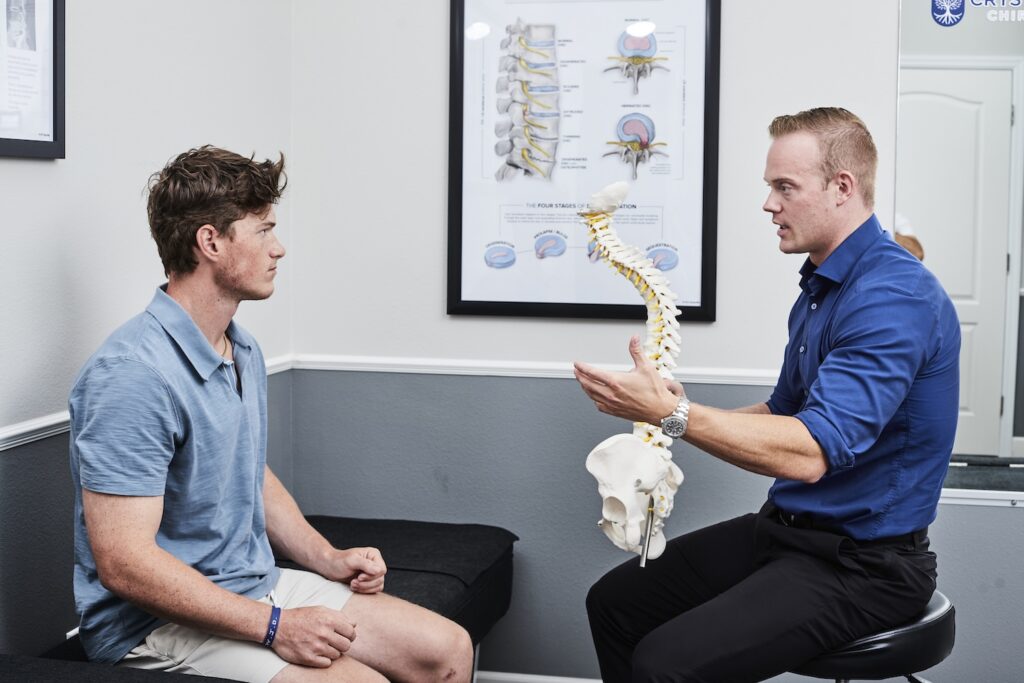
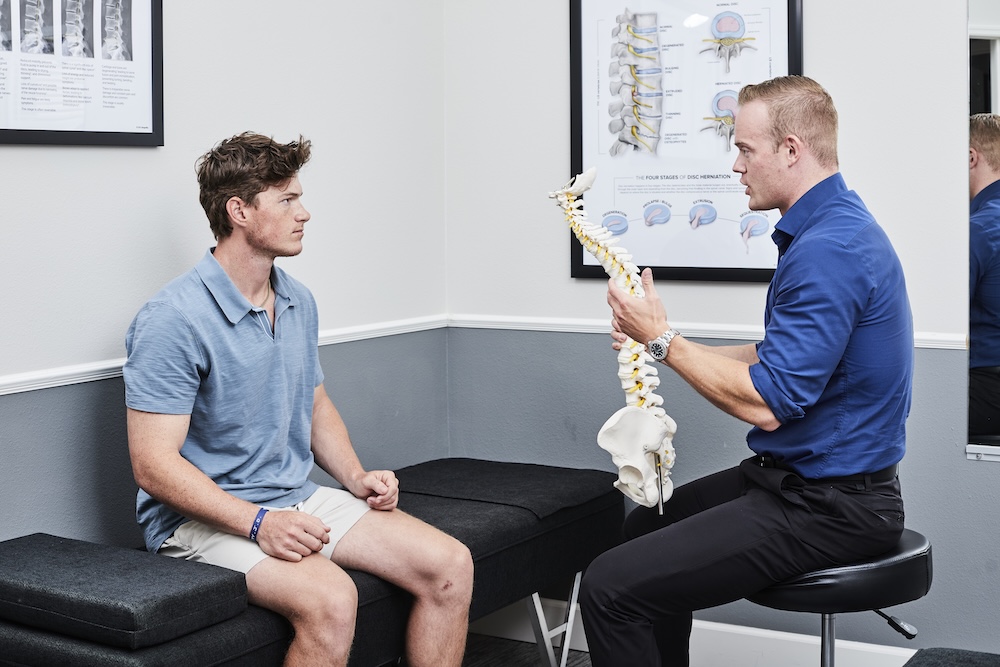
Each spinal disc is a flexible, shock-absorbing pad with a tougher outer ring and a softer center. Think of it like a jelly doughnut designed to spread load and allow movement between vertebrae. When a disc is overloaded or repeatedly stressed, the outer ring can become irritated. It may bulge outward or, in some cases, the inner material can herniate through a weakened area and irritate a nearby nerve.
Disc issues most commonly affect the low back (lumbar spine) and the neck (cervical spine). In athletes, these changes often develop from repeated bending, twisting, or heavy compressive loads—especially when control or alignment is off.
Why Disc Health Matters for Athletic Performance
Healthy discs help you transfer power through your core, rotate efficiently, and absorb impact. When a disc is irritated, your body often tightens surrounding muscles to guard the area. That protective tension can limit hip and shoulder motion, sap speed, and change your mechanics. Over time, this compensation can spread stress to other joints.
Protecting your discs is not just about pain relief—it’s about preserving performance. Balanced alignment, strong and coordinated core activation, and clean movement patterns keep discs happier under load and during high-speed changes of direction.
Common Causes and Risk Factors in Sports
Disc injuries don’t happen in a vacuum. They usually follow a pattern of stress that outpaces your tissue’s capacity to handle it. In the Lutz area, we see disc problems across many sports—golf, baseball, tennis, pickleball, weightlifting, running, and field sports.
Typical contributors include repeated forward bending with rotation, heavy lifting without proper bracing, sudden spikes in training volume, and fatigue-driven form breakdowns. Limited hip mobility or stiff thoracic rotation puts extra strain on the low back. Poor sleep, inadequate recovery, and dehydration can also reduce tissue resilience.
Signs and Symptoms to Watch For
Disc irritation can feel different from one person to another. Some athletes report a deep, achy low back or neck pain that worsens after sitting or bending. Others notice sharp pain with a specific motion, or pain that travels into a leg or arm. Tingling, numbness, or a feeling of weakness may occur if a nerve is involved.
Morning stiffness that eases as you start moving is common. Pain that increases with coughing, sneezing, or straining can be another clue, as these raise pressure inside the disc. If you feel your performance drop because you’re guarding your back or neck, it’s time for a skilled, chiropractic evaluation.
How Chiropractic Care Supports Prevention and Recovery
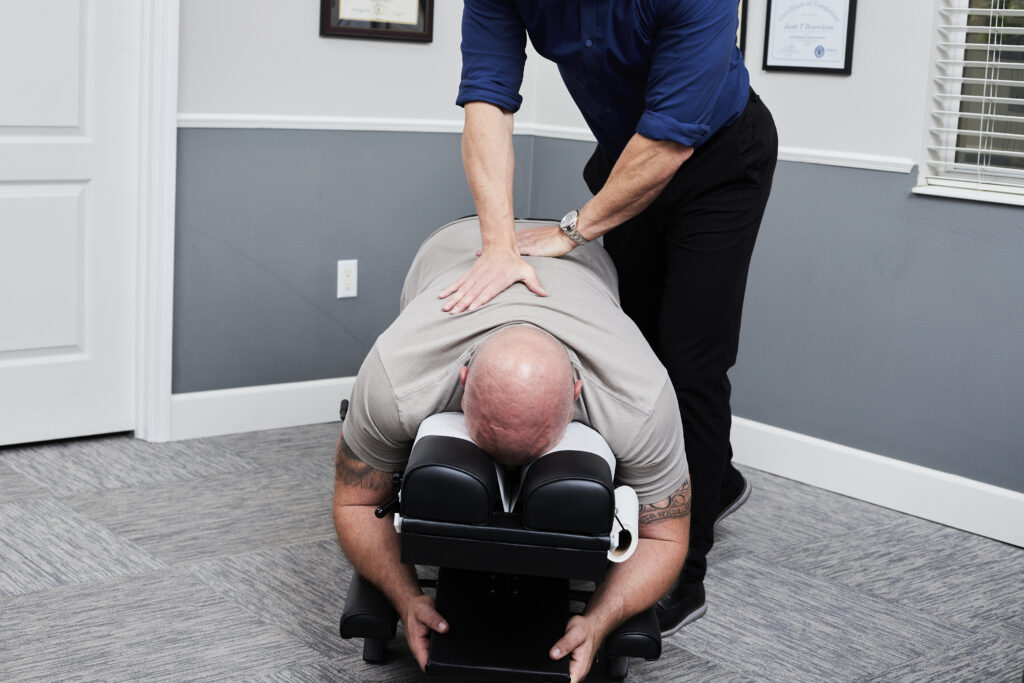
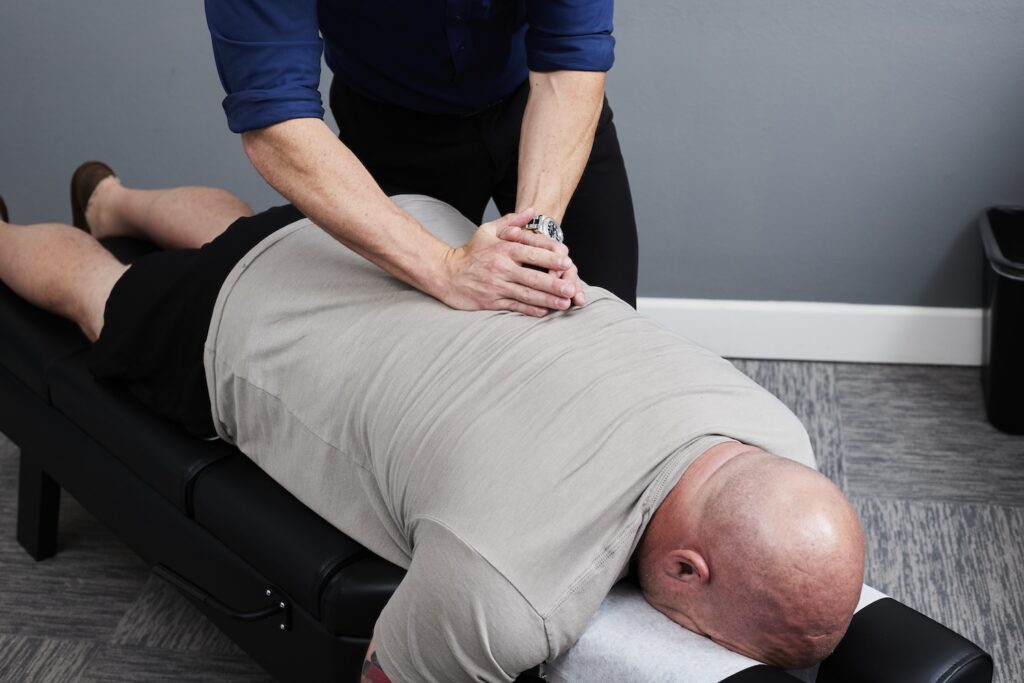
Chiropractic is a frontline, conservative approach for spine-related pain and movement problems. At Crystal Grove Chiropractic, your plan starts with a detailed history, orthopedic and neurologic testing, and sport-specific movement analysis. We identify which joints are restricted, which patterns are overloaded, and which positions increase or decrease your symptoms.
Spinal adjustments aim to restore normal joint motion and reduce mechanical stress on the disc. Gentle, controlled techniques can help reduce guarding, improve alignment, and create a better healing environment. For certain lumbar disc presentations, flexion-distraction or other low-force methods may be used to ease pressure and improve mobility.
In addition to adjustments, we use targeted mobility work and stability training that your chiropractor teaches and progresses. Directional preference exercises—movements that reduce or centralize your symptoms—are often helpful when selected based on your exam. As symptoms settle, we guide graded loading so your spine learns to tolerate athletic demands again.
Evidence supports spinal manipulation as a reasonable, non-drug option for back pain and function for many people when performed by trained professionals. Organizations such as the American College of Physicians and the National Center for Complementary and Integrative Health note spinal manipulation as part of conservative care for back pain, with generally favorable safety when appropriate screening is performed (ACP Clinical Practice Guideline, 2017; NCCIH Back Pain Overview). We apply these principles with the athlete’s season and goals in mind.
Simple Prevention Strategies You Can Start Today
Great prevention blends smart mechanics, recovery, and progression. Here are practical steps we coach athletes on in our Lutz clinic:
- Dial in your hinge and brace: Learn a hip hinge that keeps your spine neutral and a 360-degree abdominal brace for lifts, swings, and deceleration.
- Respect rotation: Build thoracic rotation mobility and hip internal/external rotation so the low back doesn’t do the twisting alone.
- Progress load and volume gradually: Increase one variable at a time—weight, speed, or total reps—to avoid sudden spikes.
- Mind the morning: Discs are more hydrated early in the day; warm up well and avoid heavy spinal flexion first thing.
- Technique checkups: Get periodic movement tune-ups with your chiropractor to catch small compensations before they turn into pain.
- Recover like a pro: Prioritize sleep, hydration, and post-training cooldowns. Tissue that recovers well tolerates more load.
- Core endurance over max sit-up counts: Planks, side planks, and anti-rotation work build spine stability without excessive disc strain.
- Rotate practice tasks: Vary drills and loading patterns during the week to distribute stress.
- Footwear and surface awareness: Old shoes or big changes in playing surfaces can shift forces to the spine; update and adapt gradually.
- Listen to early signals: If a motion repeatedly causes pain, stop and get an evaluation. Early course-correction prevents bigger setbacks.
The Recovery Roadmap: From Pain to Play
Every case is unique, but most athletes follow a similar arc back to sport. Your chiropractor tailors the speed and specifics to your symptoms, test findings, and season timeline.
- Calm the fire: Reduce pain and inflammation while protecting motion. Gentle adjustments, low-force techniques when indicated, and strategic activity modification help you settle quickly.
- Restore motion and alignment: Progressively improve segmental mobility, reduce guarding, and reintroduce symptom-reducing movements selected from your exam findings.
- Rebuild capacity: Add endurance-based core work, hip and thoracic mobility, then graded loading for the spine. We emphasize form, tempo, and breath control.
- Return-to-play ramp: Rehearse sport-specific patterns—rotational power, sprint mechanics, change of direction—while monitoring symptoms, strength, and control.
- Maintain and monitor: Keep periodic chiropractic check-ins, refresh movement quality, and adjust training loads to stay ahead of future flare-ups.
Timelines vary. Some athletes improve within a few weeks, while others with more significant disc irritation may need a longer runway. The goal is steady progress without boom-and-bust cycles.
When to See a Chiropractor in Lutz
If you have back or neck pain that persists beyond a few days, limits training, or keeps returning, schedule a chiropractic assessment. Pain that travels into an arm or leg, numbness or tingling, or stiffness that changes how you move are all good reasons to come in. Early evaluation helps us identify patterns that aggravate your disc and make a plan to change them.
Chiropractic care is not just for injuries—it’s for keeping your spine working at its best through busy training blocks, tournaments, and the Florida heat. Here in Lutz, we routinely help athletes fine-tune mechanics and reduce recurrence risk through alignment, mobility, and strength strategies tailored to their sport.
When to Seek Medical Care Right Away
Some symptoms require urgent medical attention rather than conservative care. Seek immediate medical evaluation if you experience loss of bladder or bowel control, numbness in the groin or saddle area, unexplained fever with back pain, a history of significant trauma, or rapidly worsening weakness in a limb. These are uncommon, but they matter. If we see any red flags during your exam, we will refer you promptly.
Myths and Facts About Disc Injuries and Athletes
There’s a lot of noise out there. Here are a few clarifications we share with patients.
| Myth | Fact |
|---|---|
| A herniated disc means you must stop sports for months. | Many athletes return sooner with the right plan. Pain-guided progression and chiropractic-led loading can restore capacity safely. |
| If imaging shows a disc bulge, surgery is the only fix. | Most disc-related pain improves with conservative care. Imaging findings often do not predict pain or performance by themselves. |
| Core strength alone prevents disc problems. | Core endurance and control matter, but so do alignment, hip and thoracic mobility, recovery, and smart training progression. |
| If pain decreases, the problem is gone. | Symptoms often improve before capacity is fully rebuilt. Finishing the plan reduces the chance of recurrence. |
Local Support at Crystal Grove Chiropractic
As your neighborhood chiropractors in Lutz, we know the demands of our local sports—golf in the Tampa Bay sun, year-round tennis and pickleball, school sports, CrossFit-style training, and weekend 5Ks. We tailor care to your season, travel schedule, and event goals. Our focus is to keep you moving, teach you what your body needs, and guide you back to confident performance.
If you’re unsure whether your symptoms are disc-related or muscular, we’ll help you figure it out. A clear plan beats guesswork, and early, precise adjustments paired with targeted movement make a powerful combination.
Frequently Asked Questions
Can you play sports with a herniated disc?
Often, yes—with a structured plan. Many athletes train around symptoms while the disc calms, then ramp up under chiropractic guidance to protect alignment and control.
How long does a disc injury take to heal?
It varies. Mild cases may improve in a few weeks; more irritated discs can take longer. The key is steady progress in pain, motion, and load tolerance, not rushing the timeline.
Are spinal adjustments safe for disc herniations?
For most people, when provided by a trained chiropractor after a proper exam, adjustments are considered safe. Techniques are selected and modified based on your presentation and goals.
Do all disc injuries require imaging?
Not always. Many athletes improve with a thorough clinical exam and conservative care first. Imaging may be considered if red flags are present or progress stalls.
What’s the difference between a bulging and a herniated disc?
A bulge is a broad-based outward shaping of the disc. A herniation means the inner material has pushed through a weakened area of the outer ring. Both can be managed conservatively in many cases.
Which exercises should I avoid with a disc issue?
Movements that repeatedly aggravate your symptoms—often deep spinal flexion under load or flexion with rotation—are paused early on. Your chiropractor will personalize guidance.
TL;DR
- Disc injuries in athletes often come from repeated bending, rotation, or heavy loads with poor control.
- Chiropractic care is a frontline approach to reduce pain, restore motion, and guide safe return to sport.
- Prevention hinges on strong bracing, clean hip hinge, hip and thoracic mobility, and gradual training progressions.
- Seek a chiropractor if pain persists, radiates, or limits performance; seek urgent medical care for red flags.
- Most athletes improve with a clear, stepwise plan—imaging and surgery are not always necessary.
References
- American College of Physicians Clinical Practice Guideline on Low Back Pain (2017)
- National Center for Complementary and Integrative Health – Spinal Manipulation for Low-Back Pain