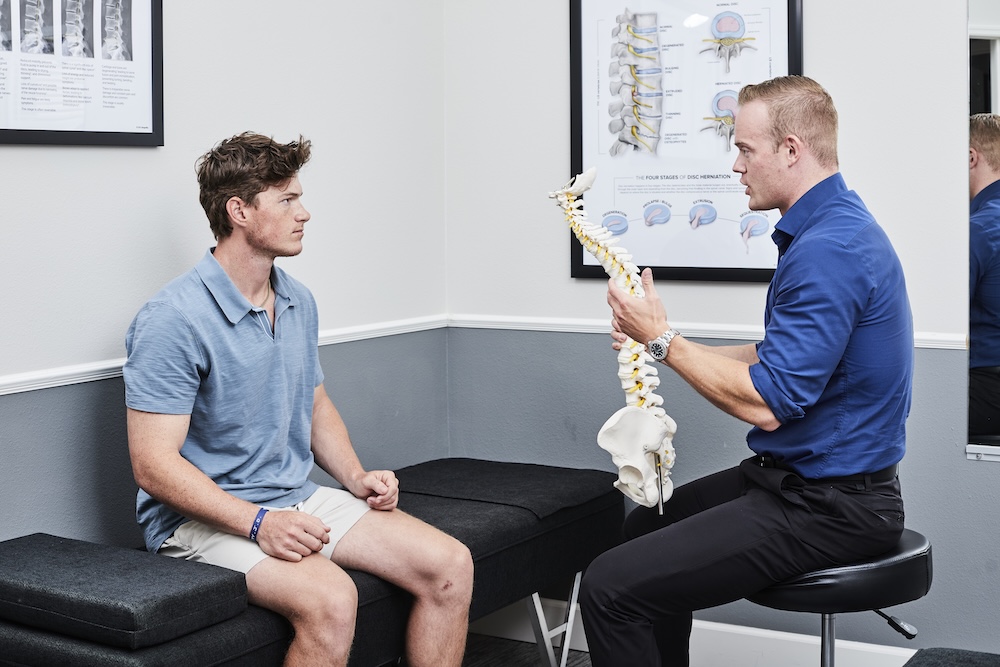
You might not realize it, but your daily habits could be undermining your spinal alignment and posture. By making a few strategic adjustments, you can greatly improve how you carry yourself and feel throughout the day. From creating a more ergonomic workspace to strengthening your core and practicing mindful movements, these three tips can set the foundation for lasting change. But how do you implement these strategies effectively in your busy life? Let's explore these practical steps further to help you achieve a more aligned and comfortable posture.
Adjust Your Workspace
A well-adjusted workspace can make a significant difference in your spinal alignment and overall posture. When you're sitting at your desk, it's essential to guarantee your chair, desk, and computer screen are set up correctly.
Start by selecting a chair that supports your lower back. Your feet should rest flat on the floor, with your knees at or slightly below hip level. If your feet don't reach the ground, consider using a footrest.
Next, position your desk and monitor at the right height. Your screen should be at eye level, so you don't have to strain your neck to see it. Keep the top of the monitor screen aligned with your eyes, about an arm's length away. This reduces the tendency to lean forward, which can lead to slouching.
Don't forget about your keyboard and mouse placement. They should be close enough so you can keep your elbows at a 90-degree angle while typing. This positioning helps prevent shoulder strain. Use a padded wrist rest if necessary to maintain a neutral wrist position.
Lastly, take regular breaks. Stand up, stretch, and move around every 30 to 60 minutes. This movement encourages better circulation and can help alleviate any tension that builds up from sitting too long.
Strengthen Core Muscles
Core muscles play an essential role in maintaining proper spinal alignment and posture. When these muscles are strong, they help support your spine, reducing the risk of injury and discomfort. Strengthening your core isn't just about aesthetics; it's about creating a stable foundation for your entire body.
To effectively strengthen your core, incorporate a variety of exercises into your routine. Start with planks, as they engage multiple muscle groups simultaneously. Hold a plank position for 20 to 30 seconds, gradually increasing the duration as you get stronger. Consider adding side planks to target your obliques, which play a vital role in rotational movements.
Another excellent exercise is the bird-dog. Begin on your hands and knees, then extend your right arm forward while simultaneously stretching your left leg back. Hold for a few seconds, then switch sides. This exercise enhances balance and coordination while engaging your core.
Don't overlook the value of pelvic tilts. Lie on your back with your knees bent, feet flat on the floor. Gently tilt your pelvis upward, pressing your lower back into the ground. This simple movement helps activate the deep core muscles that support your spine.
Incorporate these exercises into your fitness routine at least three times a week. As your core muscles strengthen, you'll notice improved stability, posture, and overall body alignment.
Practice Mindful Movements
Practicing mindful movements can greatly enhance your spinal alignment and posture. When you become aware of how you move throughout the day, you can make adjustments that lead to better alignment. Start by paying attention to your body during everyday activities like walking, sitting, or even standing. Notice how your spine feels and whether your shoulders are relaxed or tense.
Integrating mindfulness into your movements can be as simple as focusing on your breath. When you breathe deeply, you naturally engage your core muscles, which support your spine. Try to synchronize your movements with your breath. For instance, when you lift something, inhale as you prepare and exhale as you lift, maintaining a straight back.
Additionally, consider incorporating practices like yoga or tai chi into your routine. These disciplines emphasize fluid, deliberate movements and can improve your awareness of body mechanics. They teach you to move in ways that keep your spine aligned and reduce unnecessary strain.
Remember to check in with yourself throughout the day. If you find yourself slumped over your phone or computer, take a moment to realign your posture. Sit up tall, roll your shoulders back, and ground your feet firmly on the floor.
Practicing these mindful movements not only helps your spinal alignment but also cultivates a deeper connection between your mind and body. By being present in your movements, you can achieve lasting improvements in your posture and overall well-being.
Conclusion
By incorporating these tips into your daily routine, you can greatly improve your spinal alignment and posture. Start by adjusting your workspace to fit your needs, then commit to strengthening your core muscles regularly. Finally, practice mindful movements to stay aware of your posture throughout the day. Remember, small changes can lead to big improvements in how you feel and move. Take these steps today for a healthier, more aligned you!